Behavioral Re-Education Camps — School District Produces Video of What a Return to School Looks Like

SOURCE: activistpost.com

The debate about opening schools in the fall is heating up, and sadly, it has already become a partisan issue. Liberals have taken the stance that it is not safe to re-open schools, while blasting conservatives who seem to really want schools to reopen.

Whatever side you’re on in this conversation, if schools do re-open, kids will be subjected to an insane regimen of new distancing and safety measures. In fact, it won’t look like school much at all, but more like a behavioral re-education camp.

Fullerton School District near Anaheim California recently produced a promotional video for parents, demonstrating what the ‘new normal’ will look like for school kids. And while this is, of course, just one school district, still images from the production offer a fair glimpse of what it would take to reopen schools during a pandemic.

FULL ARTICLE

Το κουσούρι του τοπικισμού για το 1821- η περίπτωση της Αίγινας

του Γιωργου Κυριακού

“Τι έχουμε να πούμε σχετικά με το επόμενο άρθρο του Αιγινίτη Γιώργου Κυριάκου; Στο παρελθόν υποστήριζα τις αξιώσεις της Αίγινας για αναγνώριση, ειδικά ως τόπος της ορκωμοσίας του Καποδίστρια στις 26 Ιανουαρίου 1828 και δημιουργίας του νέου Ελληνικού κράτους. Η ημερομηνία της 26ης Ιανουαρίου τυχαίνει να συμπίπτει με την ημερομηνία της επίμαχης εθνικής εορτής της Αυστραλίας και σαν κάποιος που γεννήθηκε στην Αυστραλία εντυπωσιάστηκα από αυτή τη σύμπτωση. Στην πραγματικότητα αποτέλεσε επίσης την έμπνευση για μια εκδήλωση στην Αθήνα στις 26 Ιανουαρίου 2019 προς τιμή του Julian Assange. Αλλά η άποψη του Γιώργου Κυριάκου, την οποία υποστηρίζει ο ιστορικός Παναγιώτης Πασπαλιάρης (όντως Ναυπλιώτης αλλά και ιστορικός με σεβασμό προς τις πραγματικότητες), έχει κερδίσει την αλληλεγγυή μου, ιδιαίτερα δεδομένης της κοινής υποστήριξής της από ανθρώπους με πολύ διαφορετική πολιτική τοποθέτηση όπως ο Κυριάκου και ο Πασπαλιάρης.”

Γ.Χ.

Στις 11 Μαΐου κατόπιν τηλεδιάσκεψης του Δημοτικού Συμβουλίου «προτάθηκαν τα μέλη που θα συγκροτήσουν την Συντονιστική Επιτροπή του Δήμου Αίγινας, για την συμμετοχή της Αίγινας στον εορτασμό των διακοσίων χρόνων από την Ελληνική Επανάσταση του 1821»(1). Η απόφαση ήταν ομόφωνη και η οποία ενέκρινε και τα μέλη της επιτροπής. Ήδη όμως από τον Ιανουάριο είχε τεθεί «το ζήτημα του συντονισμού των δράσεων και των εκδηλώσεων, για την συμμετοχή της Αίγινας στο πρόγραμμα της Επιτροπής “Ελλάδα 2021”, που αφορά στην επέτειο των 200 χρόνων από την Επανάσταση του 1821, έχει συζητηθεί στο Δημοτικό Συμβούλιο της Αίγινας, με κάποιες πρώτες τοποθετήσεις, μέσα από προτάσεις για την μορφή που θα πρέπει να έχει και τους τρόπους που αυτό θα προωθηθεί προς την “Επιτροπή “Ελλάδα 2021″»(2). Τον Ιούνιο, ο πρόεδρος της επιτροπής παραιτήθηκε για άγνωστους λόγους(3). Πριν λίγες ημέρες ο νέος πρόεδρος της επιτροπής, ο γνωστός Αιγινήτης δημοσιογράφος Μανόλης Κοττάκης, ανέλαβε την προεδρία της επιτροπής με δηλώσεις όπως «όλα άρχισαν από εδώ, όλα άρχισαν από την Αίγινα, την πρώτη πρωτεύουσα»(4). Στο μεταξύ παρεμβάσεις του παλιού δημάρχου Σακκιώτη (5)(6), του περιφερειακού συμβούλου και πρώην αντιπεριφερειάρχη Νήσων(7) αλλά και υπόμνημα διαμαρτυρίας της δημοτικής αρχής-μητρόπολης Ύδρας, Σπετσών και Αιγίνης(8), ήταν ενέργειες με στόχο την ανάδειξη της Αίγινας ως πρώτης πρωτεύουσας του ελληνικού κράτους. Για το καλό τίνος;

Κατ’ αρχήν η ίδια η επιτροπή που συγκροτήθηκε δεν έχει εκπονήσει ή αναφερθεί σε αρχές, θέσεις και στόχους, απαραίτητο πεδίο αναφοράς για την αποτίμηση της επανάστασης του 1821 και της σημασίας της στο σήμερα, ωστόσο έχει εκδηλωθεί η πρόθεση από πλευράς Δημοτικού Συμβουλίου ο συντονισμός με την επίσημη διορισμένη επιτροπή από την κυβέρνηση. Κι ενώ έχουν προκύψει απίστευτες προκλήσεις από τον πρωθυπουργό Μητσοτάκη ο οποίος δήλωσε την 25η Μαρτίου ότι «πριν από 200 χρόνια» οι Έλληνες «συγκρότησαν έθνος» ή από την Γιάννα Αγγελοπούλου και το λογότυπο της επιτροπής που προβάλει ένα κασκόλ (που με καλή θέληση μοιάζει με 2 δίπλα στο 1) κι ακόμα περισσότερο από μέλη της διορισμένης από την κυβέρνηση επιτροπής που λοιδορούν τις μνήμες αγωνιστών του ’21, του Καποδίστρια… Κι ενώ έχει προκύψει η παραίτηση μιας πανεπιστημιακού από την επίσημη επιτροπή για λόγους αξιοπρέπειας, ενώ έχουν προκύψει προκλήσεις από τη στάση μελών της επίσημης επιτροπής που δηλώνουν ότι «οι Έλληνες δεν αισθάνονταν καταπιεσμένοι από την Οθωμανική αυτοκρατορία» κι ενώ βρίσκεται μπροστά μας η πρόκληση της μετατροπής της Αγια-Σοφιάς στην Κωνσταντινούπολη –που ήταν το σύμβολο ενότητας των επαναστατικών αγώνων- σε τζαμί από το ισλαμοφασιστικό καθεστώς της Τουρκίας… η επιτροπή 2021 στο νησί μας είναι μέσα στην καλή χαρά: «Όλα άρχισαν από εδώ, όλα άρχισαν από την Αίγινα, την πρώτη πρωτεύουσα» δήλωσε ο Αιγινήτης δημοσιογράφος Μανόλης Κοττάκης. Ο ίδιος ανέφερε και την πρόθεση συνεννόησης για κοινές εκδηλώσεις με τον δήμαρχο Αθηναίων Μπακογιάννη της «πρώτης πρωτεύουσας με την τελική πρωτεύουσα» προσπερνώντας την προηγούμενη πρωτεύουσα διότι στην Αίγινα η λέξη «Ναύπλιο» οφείλει να είναι σχεδόν απαγορευμένη. Την κατάσταση την έσωσε κυριολεκτικά ο παπα-Μανόλης Γιαννούλης, ιστορικός της Αίγινας και μέλος της επιτροπής, ο οποίος εξηγώντας για το νόημα της ενότητας είπε δίπλα στον πρόεδρο της επιτροπής: «… δεν είναι μια εορτή αυτή που αφορά έναν Δήμο. Είναι εορτή που αφορά ολόκληρη την προσπάθεια του ελληνισμού να αποκτήσει κράτος. Για αυτό επειδή δεν είχε ιδρυθεί κράτος δεν μπορούμε να μιλάμε για πρωτεύουσες, συγχωρέστε με σε αυτό το σημείο, κράτος υπό σύστασιν ήταν… Για αυτό λοιπόν ας τ’ αφήσουμε τα πρώτη και δεύτερη (πρωτεύουσα)…»(9). Με αυτήν τη φαεινή και πολύτιμη εξαίρεση για μια ακόμα φορά οι άνθρωποι της τοπικής μας ελίτ μαζί με άλλους που διάγουν μέρους του βίου τους στην Αίγινα αντί να μιλήσουν για συμβολή των Αιγινητών για την επανάσταση του 1821, αντί να προβάλουν κάποιες αρχές-θέσεις και στόχους για την αποτίμηση της επανάστασης του 1821 προτιμούν να χρησιμοποιούν την εύκολη λύση της προσωρινής «καθέδρας» της κυβέρνησης του Καποδίστρια τονώνοντας τον εναπομείναντα τοπικισμό. Άλλο ένα τουριστικό προϊόν για το καλοκαίρι του 2021;

Η Αίγινα, όμως, όπως και όλες οι περιοχές των Ελλήνων είχε τη δική της συμβολή στην επανάσταση του 1821. Άνθρωποι που διέθεσαν την ίδια τους τη ζωή, την περιουσία τους, τα πλοία τους, συμμετείχαν σε μάχες και ναυμαχίες για την απελευθέρωση της Ελλάδας. Η Αίγινα φιλοξένησε ένα μεγάλο πλήθος προσφύγων από τις καταστροφές στα Ψαρά και στη Χίο και αργότερα στο ορφανοτροφείο και στο διδασκαλείο, περιέθαλψε ορφανά που μάθαιναν γράμματα και τέχνες αλλά και νέους ανθρώπους που θα στελέχωναν τα σχολεία της απελευθερωμένης Ελλάδας.

Η Αίγινα δεν είναι η πρώτη πρωτεύουσα του Ελληνικού κράτους όπως διατείνονται οι επίσημες αρχές του τόπου μας. Η πρώτη πρωτεύουσα του ελληνικού κράτους είναι το Ναύπλιο. Η Κωνσταντινούπολη ήταν ο αιώνιος πόθος των σκλαβωμένων Ελλήνων. Η Αθήνα προκύπτει ως επιλογή διαχείρισης του ξένου παράγοντα για την απομάκρυνση κάθε ιδέας που είχε στόχο την απελευθέρωση της Κωνσταντινούπολης και όλων των ελληνικών περιοχών.

Αναγκαίο ιστορικό σημείωμα για το ζήτημα της πρώτης πρωτεύουσας του ελληνικού κράτους:

Το ζήτημα της πρώτης πρωτεύουσας του ελληνικού κράτους, στην Αίγινα, είναι ένα ζήτημα που έχει επιλυθεί με πολλά εισαγωγικά τα τελευταία χρόνια. Η πρώτη πρωτεύουσα του ελληνικού κράτους έχει κατακυρωθεί στο νησί μας από τις επίσημες αρχές του. Αυτό πραγματοποιήθηκε χωρίς κάποια διοργάνωση συνεδρίου εθνικής σημασίας ή κάποια εθνικού χαρακτήρα διεργασία. Ένα σύνολο πολιτικών παραγόντων της Αίγινας και της Αττικής (αφού δεν έχουν να χάσουν ψήφους από το Ναύπλιο ή την Κόρινθο), επώνυμοι καλλιτέχνες, πανεπιστημιακοί, επιστήμονες που διάγουν μέρους του βίου τους στο νησί και σύσσωμο το τοπικό πολιτικό σύστημα έχουν αποφανθεί: πρώτη πρωτεύουσα του ελληνικού κράτους είναι η Αίγινα. Γράφεται παντού, σε όλες τις υπηρεσίες, στους φακέλους αλληλογραφίας, στις αποστολές λογαριασμών του νερού, σε κάθε περίσταση που βρίσκεται η ευκαιρία να εξυψωθεί ο τοπικισμός ως γόητρο της τοπικής ελίτ και να δοθεί ως placebo για τους ψηφοφόρους της. Ο τέως δήμαρχος Αίγινας Σ. Σακκιώτης απαντάει χαρακτηριστικά σε ερωτήσεις της εφημερίδας «Τα Νέα»:

-Ο Ιωάννης Καποδίστριας αποτελούσε ανέκαθεν μήλον της Έριδος μεταξύ πολλών ελληνικών πόλεων. Η Αίγινα µε ποιο επιχείρημα τον διεκδικεί;

-Η ίδια η Ιστορία μάς δίνει αυτό το δικαίωμα. Ο Καποδίστριας εδώ αποβιβάστηκε, εδώ έβαλε τις βάσεις του σύγχρονου ελληνικού κράτους και από εδώ για ενάµιση χρόνο έστησε στα πόδια της την Ελλάδα.

-Στο εγχείρημα για την καθιέρωση της επετείου της ορκωμοσίας του Καποδίστρια ως πρώτου Κυβερνήτη της Ελλάδας σε τοπική εορτή του νησιού έχετε συμπαραστάτες;

-Δεν επιδέχεται αμφισβήτησης το γεγονός ότι εδώ ορκίστηκε η πρώτη κυβέρνηση του σύγχρονου ελληνικού κράτους. Κατά συνέπεια όλοι οι επιστήμονες και τα συνέδρια περί τον Καποδίστρια που αποδέχονται την ιστορική πραγματικότητα είναι συμπαραστάτες µας.

Τα αντίστοιχα, όμως, συμβαίνουν και στην Κόρινθο. Στην ομιλία του ο δήμαρχος Κορίνθου στις εκδηλώσεις για την επέτειο της Α΄ Εθνοσυνέλευσης της Επιδαύρου τον Ιανουάριο του 1822 ανέφερε μεταξύ άλλων τα εξής: «Σήμερα η Κόρινθος γιορτάζει, γιορτάζει την Επέτειο της ανακήρυξης της Κορίνθου ως 1ης πρωτεύουσας της νεότερης Ελλάδας, κάτι που δεν γνωρίζουν ευρύτερα πολλοί». Πανεπιστημιακοί και άλλοι παράγοντες της περιοχής υπερθεματίζουν κι έχοντας λόγους κι αυτοί διότι όπως είναι γνωστό συνέβησαν τα εξής:

Η καθιέρωση της Εθνικής Σημαίας «Ξηράς και Θαλάσσης», Διάταγμα 540 της 15.03.1822, σε συνέχεια της απόφασης της Α’ Εθνοσυνέλευσης την 01.01.1822.

Η σύσταση της 1ης Ιεράς Συνόδου

Η ίδρυση του 1ου Κρατικού Νοσοκομείου στην Κόρινθο

Η σύσταση του 1ου Νομισματοκοπείου

Η σύσταση και Οργάνωση Τακτικού Στρατού και Τάγματος Φιλελλήνων (ν.11/23-4-1822

Επίσης αναφέρουν κι άλλους λόγους:

1.Συμβολικούς, επειδή η κατάληψη της Ακροκορίνθου υπήρξε γεγονός μεγάλης σημασίας για τους επαναστάτες.

2.Γεωγραφικούς, η Κόρινθος βρισκόταν σε εξαιρετικά επίκαιρη θέση, ανάμεσα σε δύο αξιόλογα λιμάνια, του Λεχαίου και των Κεχριών.

3.Οικονομικούς, καθώς η γεωγραφική της θέση καθιστούσε την Κόρινθο κέντρο αξιόλογης οικονομικής δραστηριότητας.

4.Διοικητικούς, επειδή ήταν ο συνδετικός κρίκος της Πελοποννήσου με την Ρούμελη.

5.Στρατιωτικούς, επειδή είχε στρατηγική σημασία και διέθετε φρούριο οχυρό, τον Ακροκόρινθο.

6.Ιστορικούς, καθώς αποτέλεσε μια από τις σπουδαιότερες ελληνικές πόλεις της αρχαιότητας.

7.Θρησκευτικούς, είναι άρρηκτα συνδεδεμένη με την Χριστιανική πίστη των Ελλήνων, την είχε επισκεφθεί ο Απόστολος Παύλος και είχε αποστείλει τις επιστολές του προς Κορινθίους.

Το Ναύπλιο όμως έχει προκριθεί ως «καθέδρα» -της ακόμα μη αναγνωρισμένης διεθνώς- Εθνικής Κυβέρνησης μετά από έναν εμφύλιο σπαραγμό που οδήγησε στην αποδυνάμωση και στις καταστροφές της Τουρκικής παλινόρθωσης από τον Ιμπραήμ. Μία ημέρα πριν από τη λήξη των εργασιών της, δηλαδή στις 4 Μαΐου 1827, η Εθνοσυνέλευση με το ΙΗ’ ψήφισμα, όρισε σαν έδρα της Κυβέρνησης και της Βουλής, το Ναύπλιο. Οι εργασίες της έληξαν στις 5 Μαΐου, αφού υπογράφτηκαν τα σχετικά ψηφίσματα. Αντιμετωπίζοντας όμως εκεί τις γνωστές ταραχές με τον εμφύλιο, η Αντικυβερνητική Επιτροπή, κλεισμένη στο Μπούρτζι με τη συγκατάθεση της Βουλής αποφασίζει με το υπ’ αρ. Α΄ Ψήφισμα και το υπ’ αρ. 32 προβούλευμα, τη μεταφορά της «καθέδρας» στην Αίγινα, όπου και μεταβαίνουν για την υποδοχή του Ιωάννη Καποδίστρια, ο οποίος με τη σειρά του αναφέρει σε επιστολές προς τους φιλέλληνες ότι «η όποια υλική ή ηθική βοήθεια να έρχεται στην Αίγινα…». Είναι φανερό ότι η Αίγινα είναι μια προσωρινή λύση μπροστά στα τραγικά γεγονότα του εμφυλίου. Άλλωστε μόλις εξομαλύνονται οι καταστάσεις αυτές, ο κυβερνήτης μεταφέρει την έδρα του στο Ναύπλιο τον Ιανουάριο του 1828 περίπου έναν χρόνο μετά από τον ερχομό του στην Αίγινα. «Η Αίγινα εγκαταλείφθηκε, τα σπίτια που έκτισαν ερειπώθηκαν, η πόλη ξανάγινε χωριό» γράφει ο Ε. Αμπού στο βιβλίο του «Η Ελλάδα του Όθωνος», εκδόσεις Αφών Τολίδη, 1972.

Όταν στις 3 Φεβρουαρίου του 1830 υπογράφτηκε το πρωτόκολλο ανεξαρτησίας της Ελλάδας (του Σπερχειού-Αχελώου) από την Αγγλία, τη Γαλλία και τη Ρωσία, το Ναύπλιο είναι η πρωτεύουσα της Ελλάδας. Τόσο ο Πόρος ως η έδρα της αντικυβερνητικής για ένα μικρό χρονικό διάστημα όσο και η Αίγινα από την οποία κυβέρνησε ο Ιωάννης Καποδίστριας για έναν χρόνο είχαν μια προσωρινή λειτουργία. Αργότερα η Αθήνα ως προορισμός των ρομαντικών Βαυαρών και της δυναστείας που κυβέρνησε την Ελλάδα μετά τη δολοφονία του Ιωάννη Καποδίστρια επικύρωνε και την μονόπλευρη σχέση της Ελλάδας με την αρχαία της Ιστορία, αφαιρώντας τη συνέχεια του Βυζαντίου. Ήταν ένας συμβολικός και πολιτικός τρόπος να ανακατευθύνουν από την κεντρική ιδέα της απελευθέρωσης της Κωνσταντινούπολης, το σύμβολο του Βυζαντίου, εκπληρώνοντας ταυτόχρονα τον αρχαιομανή ζήλο της ευρωπαϊκής δεσποτείας που καθίσταται ως διαχειριστής της ελληνικής συνέχειας. Έτσι χωρίς το Βυζάντιο, ούτε εθνική ιδέα θα υπήρχε ούτε αμφισβήτηση στα γεωπολιτικά σχέδια των ηγεμόνων. Από παλιά λοιπόν η Ιστορία είναι αντικείμενο χειρισμού για γεωπολιτικές επιδιώξεις των ηγεμονιών του κόσμου.

Η Φιλική Εταιρία, όχι τυχαία, είχε επιλέξει την Κωνσταντινούπολη ως βασικό τόπο για την εξέγερση των Ελλήνων, μέσα στο οποίο περιλαμβανόταν η σύλληψη του σουλτάνου κατόπιν μια αιφνίδιας σύγκρουσης που θα προκαλούσαν τα πληρώματα των πλοίων. Πράγματι, σύμφωνα με το «Μέγα Σχέδιον», ή «Σχέδιον Μερικόν», που είχε συνταχθεί από τον Κεφαλλονίτη Δ. Ευμορφόπουλο, ο ίδιος, σε συνεργασία με τον αρχηγό των πληρωμάτων του τουρκικού στόλου, τον Υδραίο καπετάν Γκιούστο, πλοίαρχο της τουρκικής ναυαρχίδας, θα έμπαζαν 400 ναυτικούς στον στόλο, τον οποίο και θα πυρπολούσαν εν μέρει, ενώ τον υπόλοιπο θα τον μετέβαλλαν σε επαναστατικό, θα έβαζαν φωτιά σε πολλά μέρη της πρωτεύουσας και θα δοκίμαζαν να συλλάβουν και τον ίδιο τον σουλτάνο. Γράφει σχετικά ο Φιλήμων: «…Οι πάντες συνεφώνουν περί ενός και μόνου, περί της πρώτης εκρήξεως εν αυτή τη Κωνσταντινουπόλει, ως υπισχνουμένης το ήμισυ της επιτυχίας του πολέμου διά της πυρπολήσεως του εχθρικού στόλου εν τω ναυστάθμω και της εξαλείψεως του σουλτάνου και των μεγιστάνων εν τη αγνοία των θετών πυρκαϊών. Επί του προκειμένου ειργάσθη ο Υψηλάντης ιδίως και μέχρις απειλής περί παραιτήσεως…»

Είναι ολοφάνερο ότι από την εποχή της Άλωσης, πρώτη πόλη των Ελλήνων είναι η Κωνσταντινούπολη, η Πόλις. Αναρίθμητες αφηγήσεις σε τραγούδια, αναφορές, μοιρολόγια, φυλλάδια, βιβλία εξαίρουν τη σημασία της Πόλης ως σύμβολο του ελληνισμού και της ορθοδοξίας και πάντα στόχου της μεγάλης ιδέας της απελευθέρωσης των Ελλήνων. Το σχέδιο του Ρήγα, η «Ελληνική Πολιτεία», ένα πολιτικό σχέδιο που περιλάμβανε την απελευθέρωση όλων των λαών (συμπεριλαμβανομένων και των Τούρκων) της Βαλκανικής και Μικράς Ασίας και το οποίο συμβολικά εκφράστηκε με το σταυρό και το ρόπαλο του Ηρακλή (σύνθεση αρχαίας Ελλάδας και Βυζαντίου) περιλάμβανε το βυζαντινό κράτος της εποχή της ελληνικής του αναγέννησης όταν ξεκίνησε να συρρικνώνεται από την αποικιοκρατία της Δύσης και τον επεκτατισμό της Ανατολής. Έτσι δεν είναι τυχαία η επεξεργασία σχεδίων της Φιλικής Εταιρίας για την αρχή της Επανάστασης στην Πόλη.

Σήμερα ο εορτασμός της επετείου στην Αίγινα, αλλά και σε άλλους τόπους που κυριαρχούν τοπικιστικές τάσεις, κινδυνεύει να αλλοιώσει την ιστορική μνήμη, έτσι ώστε η συμβολή κάθε τόπου να θεωρείται ως πρωτεύουσας σημασίας για την απελευθέρωση του γένους. Είναι συνετό λοιπόν να επικρατήσει στο νησί μας μια σωστή κατεύθυνση για τον εορτασμό της επετείου της παλιγγενεσίας του 1821 και ταυτοχρόνως να αναδειχθεί η μικρή ή μεγάλη συμβολή του τόπου μας σε αυτήν. Κάθε άλλη κατεύθυνση είναι εκ του πονηρού, για να διασκεδάσει και να παρηγορήσει με ανιστόρητο τρόπο τις τοπικές κοινωνίες που δοκιμάζονται από μια πρωτόγνωρη πολυδιάστατη κρίση, τονώνοντας έτσι τις τοπικές ελίτ που έχουν ως ιδεολογικό τους όπλο τον τοπικισμό. Για τα συμφέροντά τους μόνο κι όχι για το καλό των τοπικών κοινωνιών.

(1) https://www.aeginaportal.gr/eidiseis/kathimerina/28009-tamelitissyntonistikisepitropistoudimouaiginasgiatoneortasmotondiakosionxrononapotinellinikiepanastasitou-1821.html

(2) https://www.aeginaportal.gr/aftodioikisi/themata/27175-iplatformagiatinypovoliprotaseonpouaforatinepitropiellada-2021.html

(3) https://www.aeginaportal.gr/aftodioikisi/epitropes/28215-paraitithikeokgiorgostsatirisapotinepitropitoudimouaiginasgiatoneortasmotondiakosionxrononapotinellinikiepanastasitou-1821.html

(4) https://www.aeginaportal.gr/eidiseis/kathimerina/28391-olaarxisanapoedoolaarxisanapotinaiginatinprotiproteyousaomanoliskottakisparousiazeitousstoxoustisepitropisgiatoneortasmoton-200-xrononapotinellinikiepanastasi.html

(5) https://www.aeginaportal.gr/ekpompes/27516-tinapodositisistorikisalitheiaskaitouroloutisaiginasosprotisproteyousastouellinikoykratousstoneortasmoton-200-xrononapotinepanastasitou-1821-zitaoksakissakkiotis.html

(6) https://www.aeginaportal.gr/eidiseis/deltiatypou/27415-paremvasitouproindimarxouksakisakkiotigiatinaiginaosprotisproteyousasstoneortasmoton-200-xrononapotinepanastasitou-1821.html

(7) https://www.aeginaportal.gr/eidiseis/deltiatypou/28298-paremvasikatsikaristoperifereiakosymvoylioattikisiaiginaeinaiiprotiproteyousatouneoellinikoykratous.html

(8) https://www.aeginaportal.gr/aftodioikisi/anakoinoseisdimou/12519-dimosaiginasypomnimadiamartyriastopothetisisxetikametisekdiloseistimisstonioannikapodistria.html

(9)(βίντεο) https://www.aeginaportal.gr/eidiseis/kathimerina/28391-olaarxisanapoedoolaarxisanapotinaiginatinprotiproteyousaomanoliskottakisparousiazeitousstoxoustisepitropisgiatoneortasmoton-200-xrononapotinellinikiepanastasi.html

Πηγή: https://www.facebook.com/permalink.php?story_fbid=167284738278092&id=100203958319504

The blight of localism over 1821 – the case of Aegina

by George Kyriakou

What do we say to the following article by George Kyriakou in Aegina? (my translation) In the past I have supported Aegina’s claims to recognition, specifically as the site of the swearing-in of Capodistrias on 26th January 1828 and the creation of the modern Greek state. The date of 26th January corresponds to the date of Australia’s controversial national day and as someone born in Australia I was impressed by this coincidence. In fact it was even the inspiration for a function in Athens on 26th January 2019 in honour of Julian Assange. But George Kyriakou’s perspective, which is supported by the historian Panagiotis Paspaliaris (admittedly a Naupliot but also a person with a respect for historical fact) has won my consent, particularly given its joint support from people with such different politics as Kyriakou and Paspaliaris.

W.H.

On 11th May 2020 at an online meeting of Aegina’s Municipal Council an announcement was issued nominating the membership of the Municipality of Aegina’s Co-ordinating Committee for participating in the celebration of the bicentenary of Greece’s 1821 Revolution. (1). The decision was unanimous and approved by the members of the Committee. But as early as January “the question of co-ordinating the activity and the events for Aegina’s participation in the programme of the ‘Greece 2021’ Committee” for celebrating the passage of 200 years since the 1821 Revolution had been discussed in the Aegina Municipal Council, with some preliminary statements, amid proposals for the form the celebration should take and the way this could be promoted to the “Greece 2021” Committee. (2). In June the president of the Aegina committee resigned for reasons unknown(3). A few days ago the new president of the committee, the well-known Aeginetan journalist Manolis Kottakis, assumed the committee presidency with declarations such as “everything started from here, everything started from Aegina, our first capital” (4). In the meantime interventions from the former mayor (5)(6), from the regional councillor and former deputy prefect for the Islands (7) not to mention a protest memorandum from Sakkiotis to the municipal authority-Metropolis of Hydra, Spetses and Aegina (8), were actions aimed at projecting Aegina as the first capital of the Greek state. For whose benefit?

For a start, the constituted committee itself has not elaborated or mentioned principles, positions or objectives, a necessary terrain of reference for evaluating the Revolution of 1821 and its meaning today, but the Municipal Council has shown an inclination to co-ordinate with the committee officially appointed by the Government. And while there have been unbelievable provocations from Prime Minister Mitsotakis, who declared on 25th March that “two hundred years ago” Greeks brought into being a nation” and from Gianna Angelopoulou and the committee logo featuring a scarf (which with a little goodwill can be construed as a 2 next to a 1) and even more so from members of the Government-appointed committee who ridiculed the memory of fighters of 1821, of Capodistrias; and while there have been the resignation of an academic from the official committee for reasons of self-respect , and provocations from the stance of members of the official committee declaring that “Greeks did not feel oppressed by the Ottoman Empire” and while we face the provocative prospect of conversion of Agia Sophia in Constantinople – which was the unifying symbol of the revolutionary struggles – into a mosque by the Islamo-fascist Turkish regime….the 2021 committee on our island was bursting with pride that “everything started from here, everything started from Aegina, the first capital”, to quote the words of the Aegina journalist Manolis Kottakis. He himself indicated a desire for agreement with Athens mayor Bakogiannis for joint celebrations between the “first capital and the final capital”, sidelining the previous capital because in Aegina the word “Nauplion” is required to be more or less taboo. The priest Father Manolis Giannoulis, historian of Aegina, literally saved the day, explaining at the side of the committee president the meaning of unity: “it is not a celebration that concerns one municipality. It is a celebration that has to do with the total endeavour of Hellenism to achieve a State. Which is why because a State had not been founded one cannot speak of capitals. Pardon me on this point but it was a State under construction. … So let’s forget this first and second (capital)…” (9). With this brilliant and valuable exception once again the people of our local elite, along with others who spend a part of their lives in Aegina, instead of projecting some positions of principle and goals for assessment of the Revolution of 1821, prefer to utilize the easy solution of the temporary housing of Capodistrias’ government, reinvigorating the surviving localism. Another tourist product for the summer of 2021?

But Aegina, like all other Greek localities, made its own contribution to the Revolution of 1821. People who put their very lives, their property, their ships, at the disposal of the Revolution, participated in battles on land and at sea for the liberation of Greece. Aegina hosted a great number of refugees from the disasters at Psara and Chios, and later in the orphanage and the teacher training college took charge of orphans who were learning reading, writing and practical skills but also of young people who would staff the schools of liberated Greece.

Aegina is not the first capital of the modern Greek state as is maintained by the official authorities of our island. The first capital of the modern Greek state is Nauplion. Constantinople was the place the enslaved Greeks perennially yearned for. Athens emerged as the administrative option of the foreign factor for dismissing every idea that targeted the liberation of Constantinople and all parts of Greece.

A necessary historical note on the question of the first capital of the Greek state

The question of the first capital of the Greek state being in Aegina is something that has been widely “dealt with” in recent years. The first capital of the Greek state has been certified as our island by its official authorities. This has been done without any organization of a conference of national significance or any process of national character. A whole range of political figures in Aegina and Attica (because they have no votes to lose from Nauplion or Corinth), well-known artists, academics, scholars and scientists who spend some of the time in Aegina and personalities from the entirety of the local political system have spoken: the first capital of the modern Greek state is Aegina. It is written everywhere, at all the public serves, on envelopes, on water bills, at every opportunity to elevate localism as the pride of the local elite and present it as a placebo to its voters. The former mayor of Aegina S. Sakkiotis responds characteristically to questions from the newspaper “Ta Nea”.

-There has always been contention between a number of Greek cities over Ioannis Capodistrias. What claims does Aegina have over him?

-We are given this right by History. Capodistrias disembarked here. It was here that he laid the foundations of the modern Greek and it was from here that for a year and a half he put Greece on its feet.

-Have you had supporters in the undertaking to secure national recognition of the anniversary of the swearing-in of Capodistrias as the first governor of Greece, in a local celebration?

-There can be no questioning of the fact that it was here that the first government of the modern Greek state was sworn in. Accordingly, all scholars and all conferences on Capodistrias who acknowledge the historical reality are our supporters.

But there are corresponding truths for Corinth. In the speech by the mayor of Corinth in the celebrations for the anniversary of the First National Assembly at Epidaurus in 1822 he said among other things the following: “Today Corinth celebrates the anniversary of the declaration of Corinth as first capital of modern Greece, something not widely known by many”. University academics and other personages of the area lend vociferous assent and for good reasons because of the following well-known facts:

The institution of the national flag “Land and Sea”. Decree 540 of 15.03.1822 following the decision of the First National Assembly of 1st January 1822.

The convening of the first Holy Synod

The establishment of the first state hospital in Corinth

The founding of the first mint

The recruitment and organization of the regular army and battalion of Philhellenes (law 11/23-4-1822

These other points are also mentioned:

1. Symbolic, because occupation of Acrocorinth was an event of great importance for the revolutionaries.

2. Geographic. Corinth was situated in a key position, between two important ports: Lechaio and Kechries.

3. Economic, because its geographic position made Corinth the centre for noteworthy economic activity.

4. Administrative, because it was the connecting link between the Peloponnese and Roumeli.

5. Military, because it was of strategic importance and possessed an impregnable fortress, Acrocorinth.

6. Historic, because it was one of the most important Greek cities of antiquity.

7. Religious, being inseparably linked to the Christian faith of the Hellenes, visited by the Apostle Paul, who addressed epistles to the Corinthians.

But Nauplion enjoyed preference as the seat of the still internationally unrecognized national government following civil strife which led to weakening of the polity and the disaster of Turkish restoration under Ibrahim. One day before the termination of its proceedings, that is on 4th May 1827, the National Assembly through its Resolution XVIII nominated Nauplion as seat of the government and of the parliament. The proceedings were terminated on 5th May, with the signing of the relevant resolutions. But confronted there by the familiar civil disturbances and blockaded in the Bourtzi fortress, the Provisional Administration with the consent of the Parliament resolved through Resolution No. 1 and Preliminary Decree 32 to transfer the seat of government to Aegina, to which location they themselves then moved for the reception of Ioannis Capodistrias, who in turn specified in his correspondence with Philhellenes that “all material and moral assistance should be conveyed to Aegina“. It is obvious that Aegina was a temporary solution in the face of the tragic events of civil war. In any case, as soon as the situation normalized, the Governor moved his headquarters to Nauplio in January 1828, about a year after his arrival in Aegina. “Aegina was abandoned. The houses that they had built fell into ruin. The city became a village again” writes E. Abou in his book “The Greece of Othon”, Tolidis Brothers editions, 1982.

When on 3rd February 1830 the protocol of Greek independence (Spercheios-Acheloos) was signed by England, France and Russia, Nauplion was the capital of Greece. Both Poros, as seat of the Provisional Administration for a brief period and Aegina, from which Ioannis Capodistrias governed for a year, were temporary in their function. Later Athens, as destination of the romantic Bavarians and the dynasty which governed Greece after the assassination of Ioannis Capodistrias, ratified the one-sided relationship of Greece with its ancient history, subtracting the continuity of Byzantium. It was a symbolic and political way to divert attention from the central idea of liberating Constantinople, the symbol of Byzantium, at the same time appeasing the archaeolatric zeal of the European despotism that installed itself as manager of Greek continuity. So, without Byantium there would be neither a national idea nor challenge to the geopolitical plans of the rulers. So from an early stage history has been an object for manipulation, serving the geopolitical ambitions of the world’s hegemons.

It is no accident that the Philiki Etaireia chose Constantinople as the key site for the uprising of the Hellenes, which included arrest of the Sultan following a surprise attack launched by the crews of the ships. And indeed, in accordance with the “Great Plan”, or the “Partial Plan”, devised by the Kefalonian D. Eumorfopoulos, he himself, in collaboration with the head of the crews of the Turkish fleet, the Hydriot captain Gioustos, master of the Turkish flagship , would bring 400 sailors into the fleet, some of which would be set on fire, and the rest brought into the revolution. Many parts of the capital would be torched and an attempt would be made to arrest the Sultan himself. Philemon writes in this connection: “…All agreed on one point only, that the first explosion should be in Constantinople, half opening the prospect of success in the war through setting on fire of the enemy fleet in its naval bases and eradication of the sultan and the grandees without them knowing of the fires that had been set. Ypsilantis worked on this personally up until the time of his threatened resignation”.

It is obvious that since the fall of Constantinople, this city came first in the estimation of Greeks. Countless narratives in songs, references laments, brochures, extol the city’s importance as a symbol of Hellenism and Orthodoxy and perennial focus of the Great Idea of liberation of the Greeks. Rigas’ project the “Hellenic Politeia”, a political idea embracing the liberation of all the peoples (including the Turks) of the Balkans and Asia Minor and expressed symbolically by the cross and the club of Heracles (a synthesis of ancient Greece and Byzantium) incorporated the Byzantine state of the era of the Greek renaissance and began to contract under the influence of Western colonialism and the expansionism of the East. So there is nothing surprising about the Philiki Etaireia elaborating plans for beginning the Revolution in Constantinople.

Today celebration of the anniversary in Aegina, but also in other places where localist tendencies predominate, risks adulteration of historical memory, such that the symbol of every place comes to be seen as being of primary importance for liberation of the nation. So it would be wise for a proper orientation to be adopted by our island for celebrating the rebirth of 1821 and at the same time highlighting the small or great contribution of our particular place to that end. Any other orientation would be in bad faith, for flattering and consoling in an unhistorical way local communities that are being put to the test by an unprecedented and many-faceted crisis. It could only further feed the complacency of local elites who have made localism into an ideological shield. For their own advantage, not for the good of their communities.

(1) https://www.aeginaportal.gr/eidiseis/kathimerina/28009-ta-meli-tis-syntonistikis-epitropis-tou-dimou-aiginas-gia-ton-eortasmo-ton-diakosion-xronon-apo-tin-elliniki-epanastasi-tou-1821.html

(2) https://www.aeginaportal.gr/aftodioikisi/themata/27175-i-platforma-gia-tin-ypovoli-protaseon-pou-afora-tin-epitropi-ellada-2021.html

(3) https://www.aeginaportal.gr/aftodioikisi/epitropes/28215-paraitithike-o-k-giorgos-tsatiris-apo-tin-epitropi-tou-dimou-aiginas-gia-ton-eortasmo-ton-diakosion-xronon-apo-tin-elliniki-epanastasi-tou-1821.html

(4) https://www.aeginaportal.gr/eidiseis/kathimerina/28391-ola-arxisan-apo-edo-ola-arxisan-apo-tin-aigina-tin-proti-proteyousa-o-manolis-kottakis-parousiazei-tous-stoxous-tis-epitropis-gia-ton-eortasmo-ton-200-xronon-apo-tin-elliniki-epanastasi.html

(5) https://www.aeginaportal.gr/ekpompes/27516-tin-apodosi-tis-istorikis-alitheias-kai-tou-rolou-tis-aiginas-os-protis-proteyousas-tou-ellinikoy-kratous-ston-eortasmo-ton-200-xronon-apo-tin-epanastasi-tou-1821-zita-o-k-sakis-sakkiotis.html

(6) https://www.aeginaportal.gr/eidiseis/deltia-typou/27415-paremvasi-tou-proin-dimarxou-k-saki-sakkioti-gia-tin-aigina-os-protis-proteyousas-ston-eortasmo-ton-200-xronon-apo-tin-epanastasi-tou-1821.html

(7) https://www.aeginaportal.gr/eidiseis/deltia-typou/28298-paremvasi-katsikari-sto-perifereiako-symvoylio-attikis-i-aigina-einai-i-proti-proteyousa-tou-neoellinikoy-kratous.html

(8) https://www.aeginaportal.gr/aftodioikisi/anakoinoseis-dimou/12519-dimos-aiginas-ypomnima-diamartyrias-topothetisi-sxetika-me-tis-ekdiloseis-timis-ston-ioanni-kapodistria.html

(9)(video) https://www.aeginaportal.gr/eidiseis/kathimerina/28391-ola-arxisan-apo-edo-ola-arxisan-apo-tin-aigina-tin-proti-proteyousa-o-manolis-kottakis-parousiazei-tous-stoxous-tis-epitropis-gia-ton-eortasmo-ton-200-xronon-apo-tin-elliniki-epanastasi.html

Dr. Katrin Korb on COVID-19

German Medical Doctor Katrin Korb – Speech /Transcript May 2020

Dear fellow citizens,

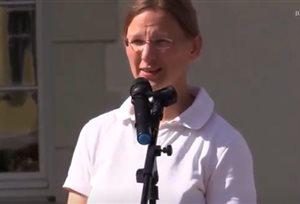
I’m thankful for being able to stand here today. My name is Katrin Korb, I have 3 children and I’m a doctor here in Oldenburg.

I’m standing here because I fell the responsibility for the health of my parents, my children and myself.

I stand here because I am furious about the attempts to get more control over the people, by attacking them with fear. I am not sure what happens exactly, though I’m sure it has to do with money and power.

Firstly, I recognize this principle. It’s the principle of our health-care system! A system which unfortunately is guilty of spreading fear in order to earn money. This fear is on both our sides, my side as a doctor, but also my patients.

There are guidelines I have to follow, guidelines for various health problems. But who is writing these guidelines?

I will give you an example: There is a European guideline for heart diseases. There are 25 different authors who draft these guidelines, 19 of which are funded by the pharmaceutical industry. They call it an ‘advisory fee’. The guidelines state that I must prescribe medications that have a lot of side effects but that do not make people better. This makes a lot of money. If I don’t follow these guidelines and something happens to these people; For example, the situation is deteriorating for whatever reason, then I will be held responsible for that. So, fear is cultivated so that I have to act against my professional beliefs.

The sick people are also frightened; ‘if you do not take these pills you will have a heart attack”. Then you will become even more sick than now”. “Listen to me; I can know, I studied for it.” “You are not sensible enough to think for yourself”. “There is therefore no room to discuss this.”

As a result, people fear taking this medication day after day, week to week, year to year, which makes a lot of money. That’s the way.

Since the beginning of this corona virus, we have been kept in a kind of shock state with frightening messages. Our governments say there is a new virus so terribly dangerous that millions will die, if we don’t protect you! “We know best what is good for because we have the experts.” You cannot make a decision for yourself. You are too stupid for that. ”We have to isolate you, take away your rights and silent you by putting on a muzzle. But we really do this for your protection”. “We frighten you so much every day through the most horrible reports that you won’t even dare to ask yourself if it’s all right”.

The mantra of the authorities is: Only when we have a vaccination can we return to “a normal”.

In other words, only a vaccination can give us back our fundamental rights.

This week, Mrs. von den Leyen (EU) has collected E 7.4 billion worldwide for the development and distribution of such a vaccine. Also Germany has paid E525,000. Normally, the development of such a vaccination takes years. That’s because security investigations need to be done.

This new virus from the corona family was discovered less than six months ago but experiments with “MRNA” are already being tried on humans. This is unknown genetic material that will be injected into our cells. You don’t have to be a doctor to get an ominous felling about this. I will not be vaccinated, I will not get my children vaccinated, and I will also advise my patients not to do this!

Paragraph Two of the Constitution does NOT specify: RIGHT TO HEALTH but right to physical integrity. That is a very big difference. So there is no right to health!

Being sick is part of our human life, but no one should inflict physical harm on us even with a dubious vaccine.

We are the ones paying for this. We already pay for the scientific and social impact of the lockdowns. OUR TAX MONEY is spent for this. And a vaccine must be financed with our tax money! Already E 525 million German tax money and this is only the beginning. Are we being asked if we want to do this? Are we asked if we want to pay for Lockdowns? NO!

All this money, the taxes we’ve paid, we want that to be spent on other things. For good education for our children, for the development of new technologies for the environment, for decent wages for employees in our “vital” professionals. For immigration of people who fled for the war. For sports, culture, etc., etc… This list is endless. In short, for things that make and keep people healthy. But with this no money can be made.

We are in a crisis. What is the way out of this crisis?

The victory over fear is the way out of this crisis.

People who can think for themselves, being creative, take responsibility for themselves working on their own health and the health of our world. People who are positive, who have friends, who enjoy life, do not get sick easily. And if they do get sick, they eventually unite with death. Knowing that life in this world will ever end and are at peace with it. You can’t scare these kinds of people. You have no power over these people.

This body has only been borrowed and someday I will have to give it back. But as long as I live in this body, as long as I fell, think and act, it will be MY body! I am responsible for that and no one else. MY BODY, which I treat in the way I think is right.

I do not wish to return to the old normal. I wish for a new better normal. With free and self-determined people, who are responsible for themselves. I believe many of us are here together with the same wish.

This gives me hope and I thank you.

H ιατρός Katrin Korb στο θέμα COVID19

Ονομάζομαι Κάτριν Κόρμπ, έχω τρία παιδιά, και εργάζομαι ως ιατρός εδώ στο Όλντενμπεργκ.

Βρίσκομαι εδώ διότι νιώθω ότι είμαι υπεύθυνη για την υγεία των ασθενών μου, των παιδιών μου κα του εαυτού μου. Βρίσκομαι εδώ διότι είμαι εξοργισμένη με τις συνεχείς επιθέσεις με φόβο, σε μια προσπάθεια να πάρουν περισσότερο έλεγχο στην ανθρωπότητα. Δεν είμαι σίγουρη για το τι ακριβώς συμβαίνει, αλλά είμαι σίγουρη πως έχει να κάνει με χρήμα και εξουσία. Κατ’αρχάς, αναγνωρίζω μια αρχή. Και αυτή είναι: το υγειονομικό μας σύστημα. Το οποίο είναι ένοχο για την εξάπλωση του φόβου, προκειμένου να κερδίσει χρήματα.

Αυτός ο φόβος, υπάρχει και στις δύο πλευρές. Και στην πλευρά του γιατρού όσο και στην πλευρά του ασθενή. Υπάρχουν κατευθυντήριες γραμμές τις οποίες ως γιατρός πρέπει να ακολουθώ, αλλά ποιός δίνει αυτές τις εντολές; Θα σας δώσω ένα παράδειγμα: Υπάρχει μια ευρωπαϊκή κατευθυντήρια γραμμή σχετικά με τις καρδιοπάθειες. Υπάρχουν 25 διαφορετικοί συντάκτες αυτών των εντολών, εκ των οποίων οι 19 χρηματοδοτούνται από μεγάλες φαρμακευτικές εταιρείες. Ονομάζονται “συμβουλευτικές αμοιβες”. Αυτές οι εντολές δηλώνουν ότι φάρμακα τα οποία οφείλω να χορηγήσω έχουν πολλές παρενέργειες, αλλά δεν θεραπεύουν τους ασθενείς. Αυτές οι κατευθυντήριες γραμμές αποδίδουν πολλά λεφτά. Εάν δεν ακολουθήσω αυτές τις εντολές, και η κατάσταση της υγείας των ασθενών μου χειροτερεύει για τον οποιονδήποτε λόγο τότε με καθιστούν υπεύθυνη. Καλλιερθγούν το φόβο, ώστε να αναγκάζομαι να λειτουργώ ενάντια στις αρχές του επαγγέλματός μου.

Οι ασθενείς είναι επίσης τρομοκρατημένοι.” Έαν δεν πάρεις αυτά τα χάπια θα πεθάνεις.” “Θα αρρωστήσεις περισσότερο.” “Άκουσέ με, το έχω σπουδάσει, είμαι σε θέση να γνωρίζω.” “Δεν είσαι σε θέση να μπορείς να γνωρίζεις τι είναι καλύτερο για τον εαυτό σου. Συνεπώς δεν υπάρχει περιθώριο συζήτησης επ’αυτού.” Ως εκ τούτου, ο φόβος στους ασθενείς αυξάνεται, μέρα με τη μέρα, και κάπως έτσι βγαίνει το χρήμα.

Εξ’αρχής, αυτής της κρίσης του κορωνοϊου συντηρούν ένα κλίμα τρομοκρατίας. Οι κυβερνήσεις μας λένε πως πρόκειται για ένα ιό τόσο θανατηφόρο, εξ αιτίας του οποίου θα πεθάνουν εκατομμύρια εάν δεν σας προστατεύσουμε. Γνωρίζουμε καλύτερα το τι είναι καλό για σας, διότι έχουμε τους ειδικούς. Δεν είστε σε θέση να αποφασίσετε για τους εαυτούς σας. Είστε πολύ ηλίθιοι για αυτό. Αναγκαζόμαστε να σας απομονώσουμε, να σας πάρουμε όλα τα δικαιώματα και να σας φιμώσουμε. Αλλά όλα αυτά τα κάνουμε για το καλό σας.

Σας τρομοκρατούμε καθημερινά με τρομερές αναφορές, τις οποίες δεν τολμάτε να διερευνήσετε. Το “επιχείρημα” των αρχών είναι: “Μόνο αν βρεθεί το εμβόλιο, θα επιστρέψουμε στην κανονικότητα.” Με λίγα λόγια, μόνο ένα εμβόλιο θα μας δώσει πίσω τα συνταγματικά μας δικαιώματα. Αυτή την εβδομάτα η Κα. Βον δε Λείεν (Πρόεδρος της Ευρωπαϊκής Επιτροπής) συγκέντρωσε 7.4 δις δις. για την εξεύρεση και διανομή του εμβολίου. Η Γερμανία έδωσε 525 εκατομμύρια ευρώ. Συνήθως, η ανάπτυξη ενός τέτοιου εμβολίου, παίρνει χρόνια. Καθώς χρειάζονται τεστ ασφαλείας. Αυτή η μορφή ιού, της οικογένειας των κορωνοϊών, ανακαλύφθηκε μόλις πριν 6 μήνες, αλλά τα πειράματα με το mRNA, ήδη δοκιμάζονται σε ανθρώπους. Πρόκειται για άγνωστο γενετικό υλικό, το οποίο θα χορηγείται στα κύτταρά μας. Δεν χρειάζεται να είναι κανείς ιατρός, για να υποψιαστεί ότι κάτι δεν πάει καλά.

Δεν θα εμβολιαστώ, ούτε τα παιδιά μου, και συνιστώ σε όλους τους ασθενείς μου να μην εμβολιαστούν.

Η Παράγραφος 2 του Συντάγματος (της Γερμανίας) ΔΕΝ προσδιορίζει το ΔΙΚΑΙΩΜΑ ΣΤΗΝ ΥΓΕΙΑ αλλά το δικαίωμα ΣΤΗ ΣΩΜΑΤΙΚΗ ΑΚΕΡΑΙΟΤΗΤΑ. Έχει μεγάλη διαφορά! Συνεπώς δεν υπάρχει δικαίωμα στην υγεία! Το να αρρωσταίνουμε είναι μέρος της φύσης μας αλλά αυτό δεν δίνει το δικαίωμα στον οποιονδήποτε να μας προκαλεί κακό με ένα αμφιλεγόμενο εμβόλιο. Εμείς θα την πληρώσουμε. Ήδη πληρώνουμε το κόστος, τόσο από επιστημονικής πλευράς όσο και κοινωνικής εξαιτίας της καραντίνας. ΟΙ ΦΟΡΟΙ ΜΑΣ εκεί πάνε. Και η εύρεση του εμβολίου πληρώνεται από τους φόρους που εμείς πληρώνουμε. Ήδη 525 εκατομμύρια ευρώ και αυτά είναι μόνο η αρχή. Μας ρώτησαν αν συμφωνούμε με αυτό; Μας ρώτησαν αν θέλουμε να πληρώσουμε για την καραντίνα; Όχι!

Τα χρήματα που προκύπτουν από φορολογία, θέλουμε να δαπανηθούν για άλλους σκοπούς. Για καλύτερη εκπαίδευση για τα παιδιά μας, για ανάπτυξη νέων τεχνολογιών για το περιβάλλον. Για καλύτερους μισθούς σε επαγγέλματα “ζωτικής σημασίας”. Για τους πρόσφυγες πολέμου. Για αθλητισμό, κουλτούρα, κτλ κτλ. Ή λίστα είναι ατελείωτη. Με λίγα λόγια, για πράγματα που μας κάνουν και μας κρατούν υγείς. Αλλα βλέπετε, αυτές οι δραστηριότητες δεν αποφέρουν χρήμα.

Είμαστε εν μέσω μιας κρίσης. Αλλά πώς βγαίνουμε από αυτήν. Αν νικήσουμε το φόβο, θα βγούμε από αυτή την κρίση. Οι άνθρωποι που μπορούν να σκεφτούν για τους εαυτούς τους, αυτοί που είναι δημιουργικοί, και αυτοί που παίρνουν τις ευθύνες που τους αναλογούν, αυτοί που προσέχουν την υγεία τους και την υγεία του κόσμου, άνθρωποι που είναι αισιόδοξοι, που έχουν φίλους, αυτοί που απολαμβάνουν τη ζωή, δεν αρρωσταίνουν εύκολα. Αλλά αν αρρωσταίνουν, συμφιλιώνονται με το θάνατο. Γνωρίζουν ότι αυτή η ζωή έχει τέλος και έχουν κάνει ειρήνη με αυτή τη σκέψη. Δεν μπορείτε να τρομοκρατήσετε τέτοιου είδους ανθρώπους. Δεν έχετε εξουσία επάνω σε αυτούς τους ανθρώπους. Αυτό το σώμα είναι δανεικό και κάποια μέρα θα πρέπει να το επιστρέψω. Αλλά για όσο ζω μέσα σε αυτό το κορμί, για όσο θα αισθάνομαι, σκέφτομαι και πράττω … θα συνεχίσει να είναι το δικό ΜΟΥ κορμί. Εγώ είμαι υπεύθυνη για αυτό το κορμί και κανείς άλλος. Το δικό μου κορμί, το οποίο το φροντίζω όπως πιστεύω πως είναι το πρέπον.

Δεν επιθυμω να γυρίσω στην παλαιά κανονικότητα. Εύχομαι μια νέα καλύτερη πραγματικότητα. Με ελεύθερους και αυτόπροσδιορισμένους ανθρώπους, οι οποίοι είναι υπεύθυνοι για τους εαυτούς τους. Πιστεύω πως εδώ σήμερα πολλοί από μας ευχόμαστε το ίδιο. Αυτό μου δίνει ελπίδα και για αυτό σας ευχαριστώ.