Category: Giulietto Chiesa

  • Capodistrias – Aegina

    January is the month of celebrations in Aegina in honor of Ioannis Capodistrias.

    Since the early years of the 21st century, the Aegina Association of Active Citizens has been campaigning for greater recognition of Capodistrias as a pioneer of European integration.

    In 2013, we secured the support of former Italian MEP Giulietto Chiesa for our effort to gain wide recognition of this historical reality.

    On January 26, 2019, the anniversary of the founding of the modern Greek state in Aegina in 1828, a function was held very close to the Acropolis in Athens in honor of the courageous and long-suffering Australian journalist Julian Assange, in the hope that he would not suffer the same fate as Capodistrias.

    This was done even though Capodistrias had no connection with Athens but rather with Aegina, Athens’ historical rival, as well as with Corfu (where he was born) and Nafplio (where he was assassinated).

    Giulietto Chiesa had been removed from the European Parliament in response to his film on the destruction of the Twin Towers in New York in 2001. Since Chiesa’s visit to Aegina in 2013 and his death in 2020, the European Union’s prestige has declined significantly. Among other things, Chiesa’s warnings about the dangers of European policy towards Israel, and even more so Ukraine, have been ignored. Now the European Union seems to be on the path to war with Russia, a war that America no longer wishes to lead, having found more promising ideas for its own future (and only its own)  than continuing the Cold War in Europe.                                             

    In response to Europe’s decline, some states have begun a planned shift towards the “global south.” Greece does not belong there spontaneously. It is not easy for Greece to disconnect from Europe, even from a Europe that seems to be heading, like Napoleon’s France or Hitler’s Germany, towards self-destruction. Can our country’s traditional friendly ties with Australia and New Zealand contribute to a geopolitical reorientation of Greece? Can such a reorientation be kept in reserve for implementation in case of failure to achieve the “Europe we want”?

    On January 26, 2028, Greeks will celebrate the 200th anniversary of the founding of the modern Greek state in Aegina. On the same day, Australians will celebrate the 240th anniversary of the dawn of Western civilization in Australia, in an unfortunate form, admittedly, but what beginning is not difficult? The British brought  civilization to Australia. Some would dispute this, but we do not. It is a biased assessment that overlooks many things. However, in the broader sense, it is true. If the British brought Western civilization to Australia, Greece brought it to the world, with similar periods of bloodshed.

    In the 21st century, Western civilization is important as a fundamental element of civilization in general.

    Do you support the idea of a joint Greek-Australian celebration of 26th January in 2028? 
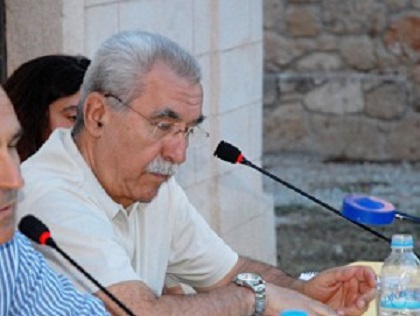
  • Statement by Giulietto Chiesa on the crisis in Ukraine

    giulietto_chiesa_talk

    (Giulietto Chiesa was a key speaker at the Aegina Society of Active Citizens’ function “Capodistrias and Spinelli today – European Union: Disintegration or a new beginning?”, held in Aegina on 23rd June 2013.)

    Function: http://main.cse-initiative.eu/?p=111 //  VIDEO

    G. Chiesa’s visit to the Capodistrian buildings of Aegina: VIDEO

    Persuading Daniel Cohn-Bendit of the importance of Capodistrias: VIDEO


    Statement

    The crisis in Ukraine, which clearly affects the international community, is a matter for deep concern, threatening both the sovereignty of Ukraine and the independence of Europe, triggering an unwelcome polarisation of the international system and impacting an always fragile geopolitical balance.

    We would like it to be borne in mind that a historical transition from a unipolar world – with the US as the sole superpower – towards a multipolar world is underway and that this process should be aided and abetted rather than contained. The whole world, including Europe and the United States, will gain from a jointly-conducted re-organisation of global governance that recognizes multipolarity.

    We believethat Europe is able to contribute positively to the peaceful emergence of a multipolar world. Indeed the Ukrainian crisis has shown that, while an independent and open Europe provides grounds for the emergence of a multipolar world, a one-sided Europe creates the conditions for a world polarized between a Western bloc and the new global powers.

    Therefore, we strongly oppose the disruption of Euro-Russian relations, with the deployment of troops on both sides of the Euro-Russian border, and in particular of US military troops on Europe’s territory, with the growing tensions provoked by the uncoordinated free-trade policies of Europe and Russia on common border countries such as Ukraine, Georgia, and Moldova.

    We consider that the Ukrainian crisis calls for the establishment of a diplomatic arena to discuss Europe’s and Russia’s rights to organize their common markets in a framework of peaceful coexistence.

    We note the humanitarian emergency situation in Ukraine and crimes and abuses committed against the civil populations during the Ukrainian crisis and urge that these should be promptly dealt with and investigated.

    We believe that the Euro-BRICS framework of co-operation can provide the proper mediation that is required for a positive outcome to be achieved.

    The situation requires global leaders with a high sense of historical responsibility and collective interest.

    We believe that responsibilities for the crisis in Ukraine must be shared between Europe and Russia. On the basis of the recognition of each player’s responsibilities it will become possible to rebuild peace in Ukraine and revive Euro-Russian relations.

    RESUMING EURO-RUSSIAN RELATIONS TO CREATE THE CONDITIONS FOR A UKRAINIAN-LED CRISIS RESOLUTION

    It is up to the Ukrainian people to organize and rebuild peace in Ukraine. However there is no way tensions between the pro-Russian and pro-European Ukrainians will de-escalate if tensions between Russia and Europe do not de-escalate first. Therefore, for the sake of peace in Ukraine, we require European and Russian leaders to re-launch a constructive dialogue, in particular encouraging the media to provide more objective information and correct any misinformation that might lead to future conflict.

    Note This draft is almost completely extracted from a joint declaration of academicians, professors, journalists, former political personalities of the BRICS countries. I believe that a dialogue could be built on this basis.

    Giulietto Chiesa

    N.B. The English text of the EuroBRICS joint declaration on Ukraine is at:

    http://www.leap2020.net/euro-brics/wp-content/uploads/2014/06/Joint-Statement-Euro-BRICS-June-2014.pdf

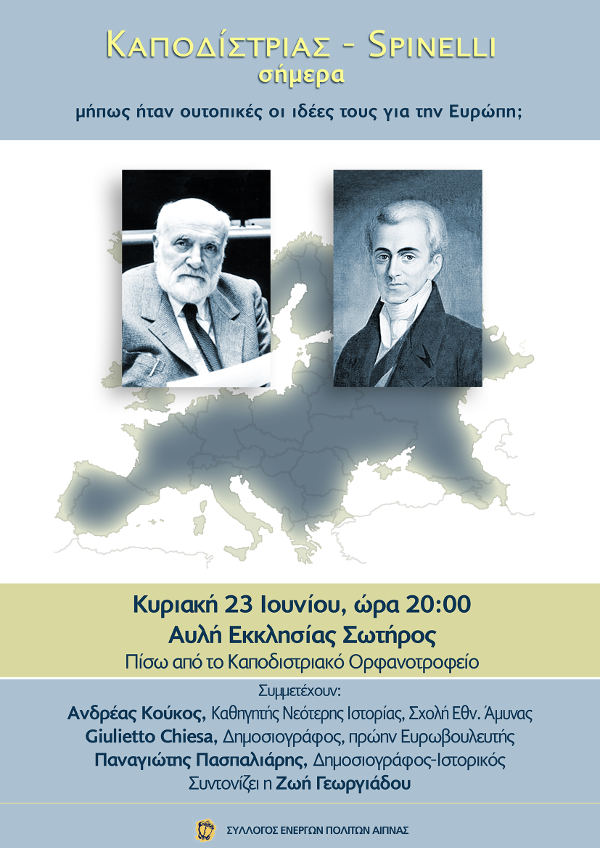
  • Capodistrias – Spinelli Today

    European Union: disintegration or a new beginning?

    This is the question posed by the crisis we are living through, which has triggered so much speculation (!) over the fate of Greece.

    Ioannis Capodistrias, Altiero Spinelli: two emblematic personalities of pan-European stature marking two different phases of the course towards a united citizens’ Europe. Anyone who has visited the European Parliament will be well aware that Spinelli plays the same symbolic role for the political circles of the European Union as Capodistrias plays for the majority of Greeks who regard the establishment of the modern Hellenic state in 1828, at Aegina, as a historic advance not just for the citizens of this country but for Europe as a whole.

    Today in the midst of crisis the European Union seems vis-à-vis Greece and other EU member countries to be introducing policies that are extremely problematic for the peoples of Europe. Is it possible in this conjuncture for anyone to believe that the ideas of these two visionaries, Capodistrias and Spinelli, have any chance of influencing the reality of our days and opening new prospects for the European Union?

    Our three speakers will attempt to provide an answer to this.

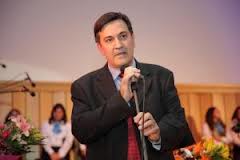
    Andreas Koukos


    koukos

    Andreas Koukos was born in Chania, Crete. He studied at the law school of the Aristotelian University of Thessaloniki and the Officers’ Military Academy and holds a post-graduate diploma in Naval Science and Strategy from the Naval War College. He is also a graduate of the National Defense College. In 2012 he completed his doctorate in the Philosophical Faculty of the University of Athens. He is a professor of modern history at the National Defense College and the Naval War College, has participated in numerous scholarly symposia in Greece and abroad and has published articles in scholarly journals. He has been consultant to the Capodistrian Cities Network has won a number of awards and distinctions. He is a Brigadier in the the Corps of Legal of Consultants of the Greek Armed Forces.

    On 21st September 2010 he founded the “Association for the Study of the Work of Ioannis Capodistrias”, currently serving as its first president.

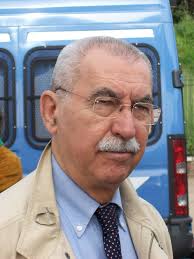
    Giulietto Chiesa


    chiesa
    Giulietto Chiesa was born in 1940 in Piedmont. In the 1980s during the Berlinguer period he was a correspondent for the L’Unita newspaper and then for La Stampa, experiences which transformed him into one of the world’s best “Sovietologists”. He has written for a number of different newsagencies of Russia, the USA, Switzerland and Germany, as well as broadcasts for Vatican Radio. In his articles, which are required reading for comprehension of the USSR in its last years, he examines globalization, the international system and the media, and the wars of recent decades. From 2004 to 2008 he was a Europarliamentarian. In the 2009 European elections he was a candidate for the Party of Human Rights in Latvia, a member of the parliamentary grouping of the Greens which promotes the human rights of Russian speakers in Latvia. He is a member of the New Policy Forum of the former president of the USSR Mikhail Gorbachev.

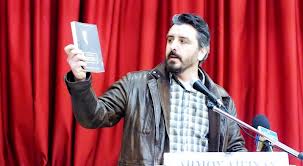
    Panagiotis Paspaliaris


    paspaliaris
    Panagiotis Paspaliaris was born in Nafplion in 1975. He studied history and archaeology at the Aristotelian University of Thessaloniki. He is the author of “The Drachma” (2007), “Great Hellenes: Ioannis Capodistrias” (2008), “Great Hellenes, Pericles” (2009). “The History of Mediaeval Hellenism in Asia Minor” (2010). He works in the private sector and is a regular contributor to the magazine Hot Doc on historical and other subjects.

    The meeting will be co-ordinated by Zoe Georgiadou.

    2013_Καποδίστριας_affisa_web