Category: Uncategorized

  • Η περίπτωση της Jane Burgermeister

    Το προφίλ της Jane Burgermeister έμοιαζε αρχικά συγκλονιστικό  15η Φεβρουαρίου 2010.

    https://rumble.com/vfxp07-covid19-vax-warning.-jane-brgermeister-warns-about-forced-vaccinations-10-y.html

    Όμως, όταν μετά από αρκετά χρόνια και πολλές περιπέτειες αναζήτησε τελικά καταφύγιο στην Ιερά Μονή του Αγίου Προδρόμου Ιωάννη, έξω από τη Λάρισα στην Ελλάδα, δεν ήξερε πώς να συμπεριφέρεται κατάλληλα σε ένα χριστιανορθόδοξο μοναστήρι.

    Χθεσινό μήνυμα (19η Οκτωρίου 2026) από τον πρώην διαχειριστή της ιστοσελίδας της, τον Johan Niklasson .

    Αγαπητοί φίλοι και ομοϊδεάτες.

    Στις 10η  Οκτωβρίου 2018, έγραψα το εξής στο φόρουμ του Project Avalon. Το αναρτώ εδώ ως σχόλιό μου για ό,τι δείχνει να συμβαίνει. Ελπίζω όλοι οι εμπλεκόμενοι να αφιερώσουν μια στιγμή για να σκεφτούν και να αισθανθούν τι συμβαίνει, και όταν το κάνουν αυτό να θυμηθούν ότι ο πιο αποτελεσματικός τρόπος για να εξουδετερωθεί οποιοδήποτε κίνημα είναι να ενισχυθούν οι υπάρχουσες εντάσεις μεταξύ των ανθρώπων στην κορυφή.

    ‘Εγραψα το 2018:

    «Συνεργάστηκα με τη Jane για πάνω από δύο χρόνια, όταν δημοσιεύσαμε μαζί το www.theflucase.com.

    Μία από τις καλύτερες ιδιότητες της Jane ήταν να ανακαλύπτει αυτό που δεν αναφερόταν σε εκθέσεις, άρθρα και άλλο υλικό. Ανακαλύπτοντας και αναζητώντας με αυτόν τον τρόπο τα κομμάτια που έλειπαν, μπορούσε να συμπεράνει και συχνά να ανακαλύπτει πράγματι ποια ήταν αυτά τα κομμάτια.

    Ήδη από την αρχή της συνεργασίας μας ήταν σαφές ότι αυτή η δύναμή της μερικές φορές γινόταν πρόβλημα. Αν έλειπαν τα γεγονότα, είχε την τάση να συμπληρώνει κάτι από τη δική της φαντασία – μερικές φορές ακριβές και μερικές φορές όχι.

    Συχνά βρισκόταν σε καταστάσεις όπου άτομα με τα οποία είχε εργαστεί ή συνεργαστεί έκαναν, έγραφαν ή έλεγαν κάτι που πυροδοτούσε την υποψία της. Μπορούσε να είναι το παραμικρό – ειδικά αν είχε να κάνει με αμφισβήτηση της ίδιας ή της δουλειάς της, ακόμα κι αν γινόταν με τις καλύτερες προθέσεις και ευγενικά.

    Αυτό οδήγησε σε μια σειρά αρκετά δραματικών «διακοπών σχέσεων» με άτομα, οργανισμούς και φίλους. Μερικές φορές αυτό γινόταν πραγματικά πικρό και εχθρικό, αλλά άλλες φορές η σχέση αποκαθίστατο ξανά.

    Εγώ ήμουν αρκετά τυχερός και διπλωματικός ώστε να μπορέσω να το αποφύγω αυτό για πάνω από δύο χρόνια. Υπήρξαν αρκετές περιπτώσεις όπου θα μπορούσε να προκληθεί ώστε να διατυπώσει τις πιο παράλογες κατηγορίες εναντίον μου με βάση υποψίες ή παρεξηγήσεις, αλλά καταφέραμε να τις ξεκαθαρίσουμε γρήγορα και να συνεχίσουμε τη συνεργασία μας.

    Το γεγονός ότι και οι δύο μας πιθανότατα «δεχθήκαμε επιθέσεις» με διαφορετικούς τρόπους από άτομα ή/και οργανώσεις που ένιωθαν απειλούμενοι από το έργο μας σίγουρα δεν βοήθησε. Η πιθανότητα να δεχόμαστε επιθέσεις από μυστικά τεχνολογικά όπλα και μεθόδους ήταν πάντα παρούσα.

    Αλλά πιθανότατα το κύριο όπλο που χρησιμοποιήθηκε εναντίον του έργου μας ήταν η παραπληροφόρηση, συγκεκριμένα ένας περιορισμένος αριθμός φημών που διαδόθηκαν/φυτεύτηκαν για να μας αποσπάσουν όλους όσους εργαζόμασταν για να ενημερώσουμε το κοινό σχετικά με την κατάσταση της πανδημίας. Τα προσωπικά μας ελαττώματα έκαναν τα υπόλοιπα.

    Η Jane συγκέντρωσε μια μεγάλη ομάδα οπαδών και θαυμαστών. Εγώ, ευτυχώς, μπορούσα να εργάζομαι χωρίς τόσο μεγάλη έκθεση. Ακόμη και οι στενοί της φίλοι και υποστηρικτές γνώριζαν την αστάθειά της, αλλά ο προτιμώμενος τρόπος αντιμετώπισής της ήταν η άρνηση ή η λανθασμένη φροντίδα. Αντί να της το επισημάνουν και με αυτόν τον τρόπο ίσως να την βοηθήσουν, πολλοί επέλεξαν να κατηγορήσουν τις ψυχολογικές επιχειρήσεις, το COINTELPRO και τις μυστικές υπηρεσίες για τη συμπεριφορά της.

    Όποιος προσπάθησε να λογικέψει τη Jane όταν βρισκόταν σε κατάσταση παράνοιας μπορεί να επιβεβαιώσει πόσο αδύνατο ήταν αυτό. Και, δυστυχώς, πολλοί επέλεξαν να «υποστηρίξουν» τη Jane παίρνοντας το μέρος της, ανεξάρτητα από το τι ισχυριζόταν. Αυτό δεν βοήθησε τη Jane, αλλά ενίσχυσε την παράνοια και την κράτησε σε αυτήν για μεγαλύτερο χρονικό διάστημα.

    Mε τη Jane αντιμετωπίσαμε αρκετά μικρά περιστατικά αυτού του είδους και, χωρίς να φτάσουμε σε κάποιο σοβαρό, αποφασίσαμε από κοινού να σταματήσουμε να συνεργαζόμαστε. Εγώ θα διατηρούσα τον ιστότοπο www.theflucase.com και θα τον διαχειριζόμουν, ενώ εκείνη θα επέστρεφε στο blog της. Δυστυχώς, προέκυψε μια τελευταία παρεξήγηση και μετά από αυτό «άλλαξε στάση».

    Δεν είχε σημασία ότι είχαμε συνεργαστεί για δύο χρόνια με πολύ θετικό και παραγωγικό τρόπο· ξαφνικά, ό,τι είχα κάνει θεωρήθηκε μέσα από το πρίσμα της παράνοιάς της και δέχτηκα κάθε είδους παράξενες κατηγορίες – μάλιστα, πολύ δημόσια.

    Μερικοί από τους ανθρώπους με τους οποίους συνεργαζόμασταν με παρότρυναν να μην υπερασπιστώ τον εαυτό μου και να «αναλάβω το χτύπημα» για να προστατεύσω τη Jane  – πράγμα που και έκανα. Πιθανώς δεν έπρεπε να το είχα κάνει αυτό, αλλά κατά κάποιον τρόπο βοήθησε τη Jane να συνεχίσει την προσπάθειά της.

    Έλαβα μόνο λίγες, πολύ περίεργες κλήσεις από εκείνη προς το τέλος της συνεργασίας μας – εξαιρετικά επιθετικές, βίαιες και φρικτές κλήσεις από την πλευρά της, με βίαιες απειλές εναντίον μου, της συζύγου μου και ακόμη και των παιδιών μας. Δεν υπήρχε τρόπος να επικοινωνήσω μαζί της ή να τη λογικέψω όταν είχε πάρει την απόφασή της.

    Βασικά δεν είχα κανένα ενδιαφέρον να μάθω τι έκανε μετά από αυτό και έχω δει μόνο πολύ σποραδικά τι έκανε τα τελευταία χρόνια.

    Πιστεύω ότι η κατάστασή της έχει επιδεινωθεί και ότι αυτό την οδηγεί σε αρνητικούς κύκλους φανταστικών εχθρών. Είναι δύσκολο να πει κανείς αν αυτό είναι προκλητό ή όχι, αλλά σίγουρα έχει συμβάλει αποτελεσματικά στην απαξίωσή της. Το να περιηγείσαι στο blog της τώρα είναι απλώς οδυνηρό και θλιβερό.

    Η Jane  θα χρειαζόταν μερικούς αληθινούς φίλους τώρα – όχι θαυμαστές και υποστηρικτές. Αν πραγματικά νοιάζεστε για εκείνη, καλέστε το δικαστήριο και ρωτήστε τι της έχει συμβεί. Φοβάμαι ότι αν κάνω οτιδήποτε, αυτό θα συνεισφέρει απλώς περισσότερο στην εχθρότητά της απέναντί μου και θα είναι αρνητικό για την κατάστασή της γενικά.

    Πιθανότατα βρίσκεται υπό κάποιο είδος αναγκαστικής ψυχιατρικής περίθαλψης – κάτι πολύ θλιβερό και ατυχές. Χρειάζεται φίλους τώρα. Όχι ανθρώπους που υποστηρίζουν τις σκέψεις της ότι έχει «επιλεγεί από τον Θεό» και ότι την κυνηγούν προσωπικά οι ηγέτες του κόσμου και ότι εμπλέκεται σε όλα τα σημαντικά τρέχοντα γεγονότα.

    Πρέπει να κάνω αυτές τις δηλώσεις, καθώς πιστεύω στην αλήθεια και ξέρω ότι η αλήθεια τελικά επικρατεί όταν όλα έχουν ειπωθεί. Λυπάμαι για την Jane και με στεναχωρεί το γεγονός ότι η «κατάστασή» της κατέστησε αδύνατο να κάνουμε περισσότερα πράγματα μαζί. Νιώθω απογοήτευση για όσους, αντί να τη βοηθήσουν, ενίσχυσαν την παράνοιά της.

    Ελπίζω να τα πηγαίνει σχετικά καλά και να λαμβάνει φροντίδα – ακόμα κι αν αυτή τη στιγμή δεν είναι εθελοντική. Φοβάμαι ότι θα κάνει κάτι πολύ δραστικό.

    Προσευχηθείτε γι’ αυτήν και, αν μπορείτε, προσπαθήστε να μάθετε πού βρίσκεται και να την επισκεφθείτε. Αξίζει την αγάπη και τον σεβασμό μας! Θυσίασε πάρα πολλά – τώρα χρειάζεται πραγματικά ουσιαστική υποστήριξη!


    Johan Niklasson»

    Περισσότερα από τον Wayne Hall

    Λοιπόν, όταν ο Άρης Χριστίδης, μέσω του συνεργάτη μου Νίκου Βακολίδη, με κάλεσε να «κάνω κάτι» για τη Jane ή μαζί με την Jane, δοκίμασα το «μαζί».

    Αγαπητή Jane,

    Σου επισυνάπτω μερικά από τα πράγματα που δημοσιεύεις στο blog σου. Κανείς δεν τα διαβάζει, εκτός ίσως από εμένα τώρα.

    Είχα αποκλείσει και τα e-mail σου και προσπαθώ να ανακτήσω μερικά από αυτά τώρα που ο Νίκος μίλησε με τη Θεοδέκτι· με το Νίκος έχουμε μιλήσει με τον Άρη Χριστίδη επίσης. Αν ήξερα ότι ήσουν στο μοναστήρι της Θεοδέκτι όταν πήγες εκεί για πρώτη φορά, θα είχα πάει να σε δω, γιατί μου άρεσε η δουλειά σου και αναρωτιόμουν τι απέγινες.  Η Θεοδέκτι είπε στον Νίκο την ιστορία για το τι είχε συμβεί κατά τη διάρκεια της παραμονής σου εκεί και ο Άρης μου είπε για το τι είχε συμβεί στη Θεσσαλονίκη, συμπεριλαμβανομένης της στιγμής που ο Νίκος σε συνάντησε στο διαμέρισμα του Άρη Χριστίδη. Ο Άρης μας είπε προχθες πόσο καλά μιλάς και ο Νίκος επίσης είχε πολύ καλή πρώτη εντύπωση για σένα.

    Βρίσκεσαι σε πολύ δύσκολη κατάσταση τώρα. Έχεις χάσει  και τα εξακόσιες χιλιάδες ευρώ που είχες μαζί σου όταν ήρθες στο μοναστήρι. Είσαι άστεγη και χωρίς χρήματα και κρυώνεις στους δρόμους της Λάρισας. Και ανταποκρίνεσαι σε όλα αυτά γράφοντας e-mail σε σημαντικά πρόσωπα στις ΗΠΑ, τα οποία δεν θα τα διαβάσουν. Και σύμφωνα με τη Θεοδέκτη, κανείς στο μοναστήρι δεν διαβάζει πλέον αυτά που γράφεις. Υπήρχε ένα άτομο εκεί, μια ξένη μοναχή νομίζω, που συνέχιζε να ενδιαφέρεται για σένα, αλλά αυτό δεν αρκεί. Και επιτίθεσαι σε όποιον προσπαθεί να σε πλησιάσει, συμπεριλαμβανομένου εμένα, και τώρα του Νίκου. Και του Bill  Ryan, ο οποίος έμαθε από εμάς ποια είναι η κατάστασή σου. Ο Bill μας μίλησε για τον διαχειριστή της ιστοσελίδας σου στην Ελβετία, τον Johan Niklasson, τον οποίο προφανώς κατηγορείς επίσης για κάτι. Τι έχεις να πεις γι’ αυτόν τώρα; Ο Bill μας έδωσε τις διευθύνσεις ηλεκτρονικού ταχυδρομείου του και θα προσπαθήσουμε να τον βρούμε. Έχουμε επίσης έναν φίλο, τον Γιάννη, ο οποίος μαζί με τη σύζυγό μου επισκέπτεται συχνά το μοναστήρι της Θεοδέκτης. Έχει μια άποψη για τα πράγματα που μοιάζει πολύ με τη δική σου και δεν ξέρω αν θα καταφέρεις να βρεις κάτι για να τον κατηγορήσεις.

    Πάντως, θα προσπαθήσουμε να βρούμε τον John Niklasson τώρα. Σύμφωνα με τον Bill Ryan, ήταν αναστατωμένος από την κριτική που του άσκησες, η οποία έγινε κάποια στιγμή στο παρελθόν. Δεν γνωρίζω τις λεπτομέρειες. Τι θα ήθελες να του πούμε τώρα, εκ μέρους σου; Τι θα ήθελες να του πεις  εσύ η ίδια;

    Λοιπόν, ο λόγος σε εσένα. Όπως είπα, έχω ξεμπλοκάρει ό,τι μπορούσα από την παλαιότερη αλληλογραφία μας και ανυπομονώ να δω πώς θα απαντήσεις.

    Με ελπίδα, αλλά ομολογουμένως όχι και πολλή.

    Wayne Hall

    Το παρακάτω είναι το πιο πρόσφατο μήνυμα που έλαβα πριν αποφασίσω να διακόψω την επικοινωνία με τη Jane για δεύτερη και, νομίζω, τελευταία, φορά.

    Αγαπητέ George Soros,

    Παρακαλώ απαντήστε εσείς ο ίδιος στα email μου αντί να χρησιμοποιείτε μεσάζοντες όπως ο Wayne Hall,  καθώς όλα τα αποδεικτικά στοιχεία στο D 15 218 σας υποδεικνύουν ως την κεντρική φιγούρα πίσω από τα εγκλήματα εναντίον μου, πίσω από τις πολιτικές της κυβέρνησης Biden για τον κορονοϊό.

    Όσο έμπειροι και επαγγελματίες κι αν είναι οι Γενικοί Εισαγγελείς των ΗΠΑ, μπορούν να καταλάβουν την τεράστια παραβίαση της δίκαιης διαδικασίας που διαπράξατε το 2015 για να εξαλείψετε τις αποδείξεις της γνώσης, το κίνητρο και τα μέσα σας, ότι η Θεοδέκτι και η Αικατερίνη Παπαϊωάννου είναι δωροδοκημένα εργαλεία και ότι ο Wayne Hall και το ζεύγος Χρυστίδη αποτελούν μέρος ενός ιδιωτικού δικτύου που έχει σχεδιαστεί για να με απειλεί, να με εκφοβίζει και να καταστέλλει τα αποδεικτικά στοιχεία εναντίον σας αυτή τη στιγμή, καθώς και ότι δεν έχω λάβει ούτε τα ελάχιστα δικαιώματά μου ούτε το ποσό που μου οφείλεται νομικά για την κάλυψη βασικών αναγκών, πράγμα που αποτελεί μέρος οικονομικού εξαναγκασμού

    Το πιο καταδικαστικό για εσάς είναι ότι η ίδια η εισαγγελέας Παπαιοάννου έχει πλέον τον έλεγχο του ίδιου φακέλου που η ίδια διαφθάρισε, ο οποίος αποκαλύπτει τον τρόπο με τον οποίο μετατρέψατε τις δωρεές σας σε επιρροή επί των κυβερνήσεων των ΗΠΑ και της Ελλάδας, προκειμένου να εξυπηρετήσετε τα ιδιωτικά σας συμφέροντα και να επιτεθείτε στα βασικά συμφέροντα των ΗΠΑ.

    Η ιδέα ότι ο κόσμος πιστεύει τη δική σας εκδοχή – εσάς, τον κατηγορούμενο, και το δίκτυο που συνδέεται άμεσα με εσάς μέσω της Θεοδέκτι και των συκοφαντιών τους εναντίον μου το 2026 – είναι, ειλικρινά, παραληρητική.

    Τώρα έχετε εμπλακεί σε υπόθεση εκφοβισμού μαρτύρων και μπορεί να τεθείτε σε προδικαστική κράτηση, ενώ το Ίδρυμά σας να κλείσει, χωρίς να απαιτούνται περισσότερα αποδεικτικά στοιχεία πέραν αυτών που έχω παράσχει στους Γενικούς Εισαγγελείς· δεν θα έχετε καμία άμυνα και θα εμφανιστείτε σε πολύ κακή θέση ενώπιον του κοινού, μαζί με τα μέλη της οικογένειάς σας, τον Alex και τον Jeffrey, καθώς και το Ίδρυμά σας.

    Πιστεύω ακράδαντα ότι θα υπάρξει μαζική υποστήριξη στις ΗΠΑ για να λογοδοτήσετε για τον ρόλο σας στα εγκλήματα που σχετίζονται με τα εμβόλια κατά της COVID-19 και να υποχρεωθείτε να καταβάλετε αποζημίωση.

    Σας παροτρύνω προσωπικά να υπογράψετε τη διαταγή, να δώσετε εντολή στους μεσάζοντές σας να επιστρέψουν τα χρήματά μου και να αποκαταστήσετε τα δικαιώματά μου, ξεκινώντας σε μία ώρα, διότι ο δικαστής θα σας εξετάσει πολύ προσεκτικά, καθώς και το τι κάνατε και τι δεν κάνατε, και θα αποφασίσει για την ποινή σας!

    Με εκτίμηση,

    Jane Burgermeister

    Υστερόγραφο

    Η Helen Haines και η Jane Burgermeister αποτελούν τους δύο αντίθετους πόλους του «κινήματός μας». Και οι δύο θεωρούν ότι αντιτίθενται στον George Soros  και στον Bill Gates.  Και οι δύο έχουν τιμωρηθεί λόγω της μονόπλευρης αντίληψής τους για το συνολικό σκηνικό. Έχουν έρθει σε σύγκρουση μεταξύ τους περισσότερο απ’ ό,τι έχουν αντιταχθεί στον Soros  και στον Gates. (Μιλώ μεταφορικά και με  πολιτικούς όρους, καθώς είναι σχεδόν βέβαιο ότι δεν θα γνώριζαν τίποτα η μία για την άλλη ως άτομα).

    Wayne Hall
  • Trump’s diesel deal with Russia will bring prices down, reverse inflationary pain

    https://cairnsnews.org/2026/10/11/trumps-diesel-deal-with-russia-will-bring-prices-down-reverse-inflationary-pain/

    Comment by Wayne Hall:

    This posting is within the logic of our enemies, but should be taken on board because it is believable as far as it goes.

  • Sydney: The Greek Language “From Memory to the Future”

    The 12th International Summer University kicks off

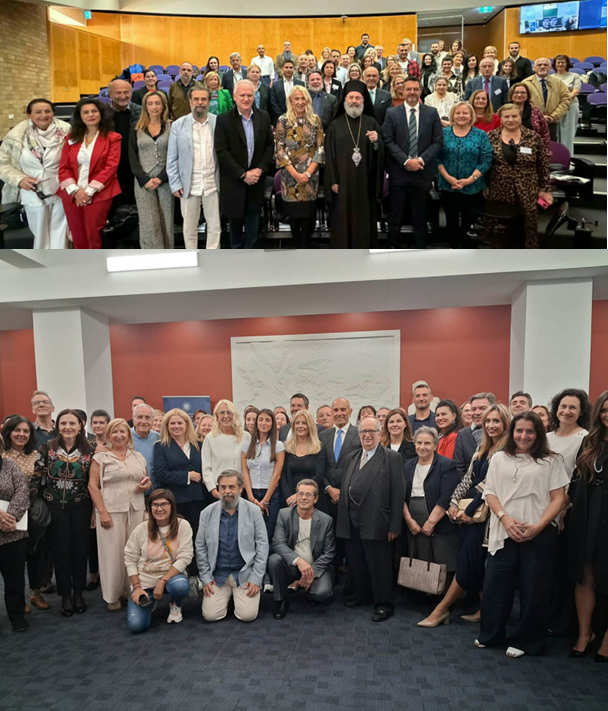
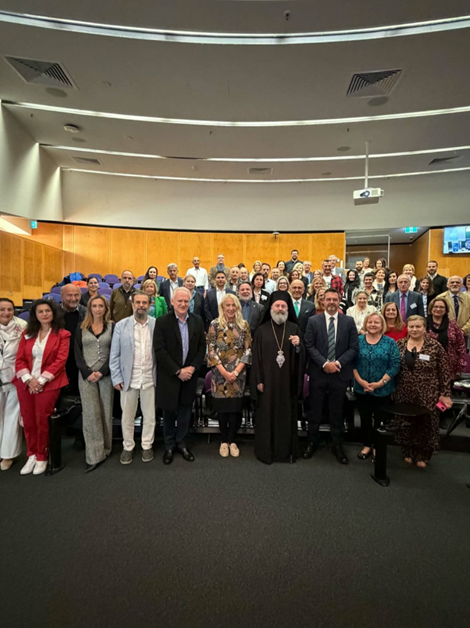
    With the theme “The Greek Language in Australia: From Memory to the Future,” the event, held from September 6 to 11 with more than 120 speakers, highlighted the power of the Greek language, education, the diaspora, and the media in the Antipodes. .

    See more of our articles in the search results

    From the language of the first immigrants to the language of their children and grandchildren. From the traditional Greek school to artificial intelligence, digital education, and new media. From cultural preservation to the creation of new international networks.

    It was against this complex and timely backdrop that the 12th International Summer University “Greek Language, Culture, and Media” took place in Sydney from September 6 to 11—an institution that has evolved into an international forum bringing together the academic community and the Greek diaspora, demonstrating that the discussion about the Greek language concerns not only the past but, above all, the future.

    The 12th International Summer University was a collaborative effort between the Laboratory for the Study of Social Issues, Media and Education of the Department of Early Childhood Education in the School of Educational Sciences at the University of Ioannina, the Greek Studies Program at the University of New South Wales, and Unity in Philia. Also participating in the event were the Foundation for Hellenic Studies UNSW, AHEPA Sydney & NSW, the International Society of Friends of Nikos Kazantzakis – Sydney Branch, the Maliotis Cultural Center of Hellenic Holy Cross, the Hellenic Society for Applied Linguistics, and numerous Greek-Australian organizations. The academic director and founder of the event is Professor of Linguistics and the Greek Language, Dean of the School of Education at the University of Ioannina, Nikoletta Tsitsanoudi-Mallidi, while the organizational management in Australia was handled by academic Vasilis Adrachtas, director of the Greek Studies Program at the University of New South Wales.

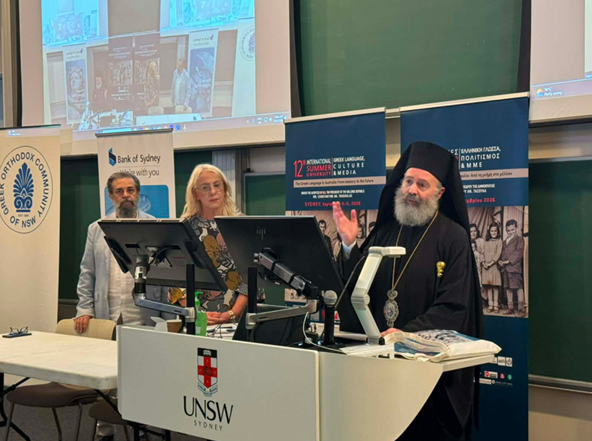
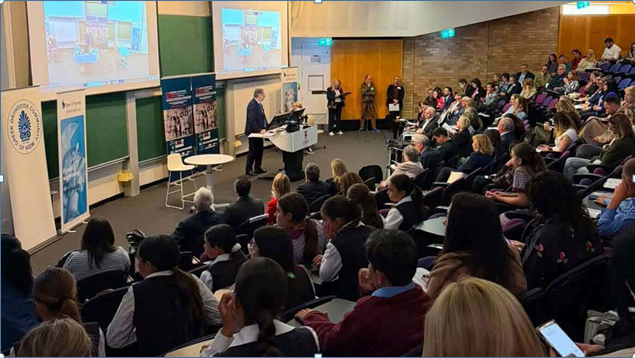
    It should be noted that the event was held under the auspices of the Presidency of the Hellenic Republic, while the opening remarks and proceedings included, among others—either in person or via message—the President of the Republic, Konstantinos Tasoulas, Minister of Education Sophia Zacharaki, Deputy Minister of Foreign Affairs Yannis Loverdos, Greek Ambassador to Australia Stavros Venizelos, state officials from New South Wales, Anna Batistatou, Rector of the University of Ioannina, as well as representatives of the Greek community and the Greek Orthodox Community of New South Wales. Archbishop Makarios of Australia also delivered a greeting, in which he placed particular emphasis on the role of the Greek language in the identity and cultural heritage of the Greek diaspora.

    The main sessions were held at the Rex Vowels Theatre at the University of New South Wales, with over 120 speakers and presenters from various countries and fields participating. The opening ceremony included a recognition of Indigenous peoples and a moment of silence in memory of the late Professor Georgios Kanarakis and his contributions to Greek literature and culture, while the event was dedicated to the memory of the pilots who recently lost their lives in Tanagra.

    Closure

    About the Presentations

    At the heart of the proceedings was the presentation by the founder and academic director of the event, Professor Nikoletta Tsitsanoudi-Mallidi, on the promotion of the Greek language through the International Summer University itself, which aims to serve as a mechanism for spreading the Greek language among the diaspora. Summarizing the institution’s philosophy, the professor emphasized that the Greek language is not treated as a museum piece but as a living, international, and evolving cultural asset.

    She highlighted the transition from the “language of memory” of the first generations of immigrants to the language of the future, which must remain alive for the younger generations of Greek-Australians living in a multicultural and predominantly English-speaking environment. Therefore, the issue is not simply whether Greek will survive, but what form of Greek will be spoken tomorrow, by whom, in what contexts, and with what tools. After all, this is the central theme running through the entire event: it is not enough to preserve the Greek language simply because it is a marker of heritage. It must remain useful, appealing, and functional in the lives of younger members of the diaspora.

    Exploring exactly what survives of the Greek language when it is transmitted into an English-speaking environment over many generations, scholar Vasilis Adrachtas, co-organizer of the conference, presented a paper titled: “Beyond Linguistic Decline: The Survival of Dialectal Forms of Greek in the Antipodes Through Three Case Studies.” The presentation essentially shifted the discussion from a general concern about language loss to the actual linguistic life of the diaspora.

    “Language decay” is one of the most widespread interpretive models for migrant and community languages; however, Professor Adrachtas points out that such a model may obscure phenomena moving in the opposite direction. In other words, the question is not only, “How much Greek has been lost?” but also, “How much Greek has survived—and in what way?” What happens to a Greek word as it is passed down from generation to generation? Which elements of the language are preserved? Which ones change? Which ones fade away, and which ones take on new life within an English-speaking environment? And finally, might “linguistic decay” not always be merely a loss, but could it also be a sign of a language that is adapting and creating new forms? He sought to answer these questions, as they play a pivotal role in the future of the Greek language in Australia as well as in Greek communities abroad.

    Adrachtas focuses on the dialectal forms of Greek that have survived in the Antipodes and uses three case studies to examine phenomena that cannot be easily explained as a simple “decline” of the language. Thus, Greek in the diaspora is not viewed exclusively as a language that is gradually disappearing under pressure from English. It can also serve as a space for the preservation, transformation, and recreation of linguistic forms. In this way, it is concluded that language changes because it is alive.

    It should be noted that the professor also participated in a special session on the interconnection between entrepreneurship, research, innovation, and the Greek language, which is viewed as part of a broader ecosystem of knowledge, education, culture, entrepreneurship, and international collaborations.

    In his remarks at the event, Archbishop Makarios of Australia placed particular emphasis on the role of the Greek language in the identity and cultural heritage of the Greek community, while stressing the need for Greek to remain alive and thriving among the younger generations of Greeks in Australia. In his remarks, as broadcast by “The Voice of Greece,” the Archbishop spoke of preserving Greek with “sacred devotion” as the language of worship—almost universally—in Australia. Consequently, the Greek language is not only a subject of education or cultural heritage but also a language of worship, as well as a vehicle for the Greek community’s ecclesiastical tradition.

    Anastasia Giannakidou of the University of Chicago, posing the question, “What makes the Greek language valuable and vibrant?” pointed out that a language does not survive simply because there is a teaching program, but rather when it acquires practical use, emotional value, a social space, and a connection to identity. Joseph Lo Bianco, a professor emeritus at the University of Melbourne and president of the Pharos Alliance, focused on the revitalization of the Greek language in Australia and the question of whether the trend of shifting from Greek to English can be reversed. Both presentations emphasized that linguistic continuity cannot rely solely on nostalgia or ancestry, but requires contemporary incentives, usage, educational structures and the active participation of younger generations.

    Schools were another key focus. Adamantia Tserentzoulia’s presentation, entitled: ‘Teaching the Greek language and culture in a multicultural environment: The experience of schools in Australia’ presented the reality of teaching Greek in a multicultural Australian environment, whilst the role of community schools and university programmes was discussed. Haroula Themistokleous referred to community language schools that operate outside the regular school day. Katerina Vetsika presented the case of SICLE, the Community Languages Education Centre at the University of Sydney, whilst Anna Skribia spoke about empowering pupils through Greek language programmes. The challenge now is to create a Greek-language school that meets the needs of children growing up in a different linguistic and social reality. And, as it has become clear, the preservation of the language cannot rely solely on the nostalgia of previous generations. We need modern teaching methods, new tools and, above all, reasons why a young person would want to learn Greek.

    Broadening the geographical and conceptual framework, the presentation by Mariava Chrysostomidou, a theatre studies student and founder of Afroblue, on the topic: ‘Roots in the Aegean, Presence in Africa: Contemporary Aspects of Greek Diaspora Culture’, focused on the Greek community in Tanzania. One of the aims of Afroblue, which is currently being established, is to revitalise the Greek language and culture in Tanzania. To this end, through qualitative research and semi-structured interviews with business people, teachers, clergy and institutional representatives – which she conducted herself during her travels over the last five years – she has highlighted how a small Greek community maintains ties with its language, culture and collective memory, whilst at the same time actively participating in the country’s social and economic life. The case of Tanzania served as a prime example of the multifaceted nature of the Greek diaspora.

    Of particular interest was the point that technology, which was once regarded as a threat to linguistic continuity, can now serve as a tool for reconnecting the diaspora with the Greek language. Contributions on this topic were made by Nikos Mathioudakis, who presented the idea of learning Greek through the words of Kazantzakis. Paris Kourtis, who raised the issue of Artificial Intelligence in the teaching of the Greek language to the Greek diaspora. Eleni Bourou, who highlighted the challenges facing the Greek language in the digital age. Professor Christos Michalakelis, who presented the digital services of Study in Greece, the national body for the internationalisation of Greek public universities, aimed at attracting students to study in our country. Jenny Pange, who spoke about the shift from geographical distance to digital proximity and the new relationship between the diaspora and the homeland.

    Journalism as a tool for language preservation was a separate section, as language is directly linked to the survival of the diaspora media. Can a media outlet also be an agent of language policy? This was the central question. Participants included, amongst others, Panos Sobolos, who spoke about the existence, contribution and usefulness of the diaspora media. Eleni Karali, who highlighted the educational role of the Greek press in Australia. Emil Theodoropoulos, who presented the media as an educational tool for teaching the Greek language. Alexia Koulouri, who highlighted the role of the media as channels of communication with Greeks in the diaspora, with particular reference to Parliament TV. Also taking part were Christos Bechlivanos and representatives of the Greek Herald, *Neos Kosmos* and *Greek City Times*, whilst a round-table discussion brought together key representatives of the Greek-Australian press to discuss the evolving role of the Greek-Australian media in Australia.

    Entrepreneurship can also act as a driving force for the sustainability of a language: language is not just a matter for schools, universities or communities, but also one of economic sustainability. The discussion was attended by representatives from the business sector, international relations, European funding programmes, research and technology organisations, and entrepreneurs, whilst the round table was moderated by Konstantinos Sgouras and Nikoletta Tsitsanoudi-Mallidi.

    Language as Culture

    The programme was not confined to linguistics. Poetry, literature, mythology, philosophy, art and history were organically woven into the discussion. Professor Thanasis Sakellariadis spoke about the relationship between language and philosophy and the ‘poetic’ dimension of philosophical thought. Despoina Papastathi presented Greek-Australian poetry in relation to diaspora identity and cultural mediation. Stella Sorotou highlighted the timeless and cross-cultural influence of mythology on the dissemination and teaching of the Greek language. And the discussion on Greek writers in the Antipodes raised yet another important question: what does it mean to persist in writing in Greek in an environment where the dominant language is different?

    The historical dimension of linguistic memory

    Panagiotis Diamantis linked the history of Greek-Australian relations with the teaching of the Greek language, prompted by the publication marking the 100th anniversary of the Consulate-General of Greece in Sydney, which was established in 1926. This approach is particularly valuable, as the language is not taught in a historical vacuum. Put simply, for a young Greek-Australian to understand why it is worth learning Greek, they also need to know the history of the people who brought that language to Australia.

    The diplomatic presence in Sydney

    The Consul-General of Greece, Georgios Skemperis, also made a significant appearance at the 12th International Summer University in Sydney. He delivered a welcome address at the event, which coincided with the celebrations marking the 100th anniversary of the establishment of the Consulate-General of Greece in Sydney. He then took part in the conference proceedings, highlighting the significance of the event and the role of the Greek language in maintaining Greek-Australians’ connection with their cultural heritage.

    The cultural aspect of the event

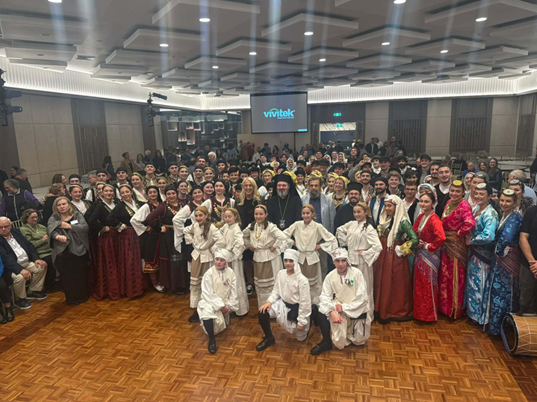
    The event featured exhibitions by Greek-Australian visual artists, a cartoon exhibition with works by Ilias Makris, Andreas Petroulakis and Stathis, a screening of the documentary ‘Arcadia, Hail!’ by Filippos Koutsaftis, as well as traditional music and dancing.

    The events featured dance groups from various Greek communities in New South Wales: Cretans, Pontians, Macedonians, Lemnians, Kalymnians, as well as dance groups from the Greek Orthodox Community of Sydney.

    In this way, the Greek language was presented not as an isolated linguistic system but as part of an entire cultural ecosystem.

    From Boston to Sydney

    At the end of the proceedings, the anthology of papers from the previous event in Boston was presented: ‘Greek Diaspora Media and the Greek Language’, edited by Nikoletta Tsitsanoudi-Mallidi and Despoina Stefanou, thereby creating a symbolic link between the two events.

    The honours bestowed

    The Australian organisers awarded an honorary distinction to Nikoletta Tsitsanoudi-Mallidi, founder and director of the International Summer University.

    At the same time, prominent figures who have contributed to the cause of the Greek language were honoured, including the academic Christoforos Charalambakis, Alfred Vincent, Joseph Lo Bianco, Ken Cruickshank, cardiac surgeon Sotirios Prapas, Panagiotis Tzokas, Adamantia Tserentzoulia, Stella Sorotou, Katerina Vetsika and Haroula Themistokleous.

    The event also received support from major Greek and Australian media organisations, including ERT, ERT3, ERT WORLD, ‘The Voice of Greece’, the First Programme, the Parliament Channel, the Greek Herald, Neos Kosmos, the SBS Greek Programme, 2MM Radio, the Greek City Times and other Greek-Australian media outlets.

  • Δρ Ντέιβιντ Μάρτιν στο Κοινοβούλιο της Ευρωπαϊκής Ένωσης: “Όταν η φωνή της λογικής φιμώνεται”

    https://odysee.com/@NIOLAND:0/This-is-the-most-important-video:6

    Δρ Ντέιβιντ Μάρτιν: “Ο SARS δημιουργήθηκε από τον άνθρωπο, μια προμελετημένη τρομοκρατική πράξη κατά της ανθρωπότητας”
    Αυτό είναι το πιο σημαντικό βίντεο που θα παρακολουθήσετε φέτος. Εκατομμύρια άνθρωποι σκοτώθηκαν μέσω της Κόβιντ-19 με σκοπό το κέρδος.

    Ο Δρ David MARTIN στο Ευρωπαϊκό Κοινοβούλιο: ” Ο SARS δημιουργήθηκε από τον άνθρωπο και η Κόβιντ19 ήταν μια σκόπιμη απελευθέρωση, ένας χημικός και βιολογικός πόλεμος και μια προμελετημένη τρομοκρατική ενέργεια που διαπράχθηκε εναντίον της ανθρωπότητας”.

    Ο Δρ David Martin (https://www.davidmartin.world/about/), ιδρυτής και πρόεδρος της M-CAM ®, μιας κορυφαίας εταιρείας διαχείρισης χρηματοοικονομικών κινδύνων, σχεδιαστής ποσοτικών δεικτών, δημιουργός πολλών εταιρειών, εμπειρογνώμονας αναθεώρησης διπλωμάτων ευρεσιτεχνίας, ερευνητής με δημοσιεύσεις στο δίκαιο, την ιατρική, τη μηχανική, αφού ξόδεψε αυτά τα χρόνια για να φέρει στην επιφάνεια την αλήθεια, παρουσιάζει την έκθεσή του στη Διεθνή Σύνοδο Κορυφής Covid III στο Ευρωπαϊκό Κοινοβούλιο.

    Στην ομιλία του στις 3 Μαΐου 2023, αποκαλεί την Κόβιντ19 μια πράξη προμελετημένης εγχώριας τρομοκρατίας, έναν χημικό και βιολογικό πόλεμο που διαπράττεται κατά της ανθρωπότητας.

    Ο κορονοϊός αναγνωρίστηκε ως παθογόνο με δυνατότητα τροποποίησης και χρήσης για βιολογικό πόλεμο ήδη από το 1965 και μετατράπηκε σε χίμαιρα τη δεκαετία του 1970.

    Η πρόθεση ήταν να δημιουργηθεί μια ευρεία αποδοχή των εμβολίων μέσω της πυροδότησης μιας παγκόσμιας πανδημίας.

    👉 Η ΣΥΝΕΧΕΙΑ ΤΟΥ ΑΡΘΡΟΥ ΕΔΩ: https://nioland.substack.com/p/558


  • Η Πρωτοβουλία του Φάρου, του Δημήτρη Χωλ

    https://odysee.com/@World.Freedom.Alliance.Greece:4/lighthouse_aegina:8

    Η Πρωτοβουλία του Φάρου, Ο φάρος προειδοποιεί για κίνδυνο. Παλεύει το σκοτάδι με το φως που ρίχνει. Συμβολισμός από το Δημήτρη Χωλ με παρουσίες από το Byron Bay της Αυστραλίας. Oι Αυστραλοί ακτιβιστές Hoody και Johnno καλωσορίζουν τους ανατρεπτικούς συναδέλφους τους που δεν αντέχουν πια τη διαιώνιση της σιωπής και του φόβου. Εμφανίζονται οι πρώτοι “lighthouse keepers” της Ελλάδας.