Author: admin

  • Μήπως ήταν άτυχη η ιδέα της Ευρωπαϊκής Ένωσης;

    Aegina Light

    Ως πρώτo (και – ας ελπίσουμε – όχι τελευταίo)  βήμα προς μια αντικειμενική συζήτηση για τη σημερινή κατάσταση της Ευρωπαϊκής Ένωσης, έξω από τη λογική της κομματικής, κοινοβουλετικής και  «μηντιακής» αντιπαράθεσης, προβλήθηκε στις 16 Ιουλίου, με τη φιλική συνεργασία του ζεύγους Πασχάλη και Σαλώμη Μελισσάρη, ένα απόσπασμα από την εισήγηση που παρουσίασε το 2009 ο κ. Ιωάννης Κοκκάλας με θέμα «Από το Σχέδιο Συντάγματος του Αλτιέρο Σπινέλι στη Συνθήκη της Λισαβόνας». Ως Αναπληρωτής Διευθυντής του γραφείου του Ευρωπαϊκου Κοινοβουλίου στην Αθήνα, ο κ. Κοκκάλας ήταν εκείνη την εποχή από τους ομιλητές στο συνέδριο «Ιωάννης Καποδίστριας, Αλτιέρο Σπινέλι, Ευρώπη» που πραγματοποιήθηκε στις 21 Ιουνίου 2009 στην Αίγινα.

    Μια εισαγωγή στην τωρινή προβολή του βίντεο παρουσίασε ο Γούεϊν Χωλ, μέλος του Δ.Σ. του Συλλόγου Ενεργών Πολιτών της Αίγινας:

    2 1

    Θα ήθελα να είμαστε σύμφωνοι ότι στη σημερινή συζήτηση δεν θα μετράει το εάν ψηφίσαμε ΝΑΙ ή ΟΧΙ στο δημοψήφησμα, εάν για τη σημερινή κατάσταση της Ελλάδας φταίνε κυρίως ο Σημίτης και ο Παπανδρέου, ο Σαμαράς και ο Βενιζέλος, ή ο Τσίπρας και ο Βαρουφάκης. Να είμαστε σύμφωνοι επίσης ότι δεν θα μετράει αν προτείνουμε να μείνουμε στο ευρώ ή να φύγουμε. Έτσι κι αλλιώς αυτά τα ζητήματα δεν τα αποφασίζουν οι απλοί έλληνες πολίτες, τουλάχιστον όχι προς το παρόν. Τη διαμάχη που γίνεται στη Βουλή, γύρω από αυτό το θέμα, ανάμεσα σε άλλα,  μπορούμε να την παρακολουθούμε. Τη διαμάχη που γίνεται στα ΜΜΕ, στα παράθυρα, στα talk shows, μάλλον καλύτερα να μην την παρακολουθούμε, επειδή απ΄ό τι φαίνεται φιλοδοξεί περισσότερο να μας τρομάζει παρά να μας ενημερώνει.

    Το ζήτημα των μέσων ενημέρωσης έχει κέντρική σημασία. Νομίζω ότι ακόμα και οι πολίτες που ψήφισαν ΝΑΙ θα έπρεπε να έχουν δυσανασχετήσει από τη στάση που κράτησαν τα ελληνικά και διεθνή ΜΜΕ κατά τη διάρκεια της εβδομάδας που προηγήθηκε του δημοψηφίσματος. Αυτό το πρόβλημα βρίσκεται και στο επίκεντρο της Έκκλησης των Ελληνογερμανών και Γερμανοελλήναν αλλά και στην ελληνική απάντηση σε αυτήν, που διατύπωσαν οι εκπρόσωποι τριών συλλόγων της Αίγινας,  Σύλλογος  Ενεργών Πολιτών,  Μορφωτικός Σύλλογος Ιωάννης Καποδίστριας και  Σύλλογος Γυναικών.

    Ο καθηγητής Juergen Link που ξεκίνησε την Έκκληση των Ελληνογερμανών και Γερμανοελλήνων προτείνει συνέδριο για το πρόβλημα των ΜΜΕ, τα οποία στην Γερμανία καλλιεργούν μίσος για τους Έλληνες και στην Ελλάδα μίσος για τους Γερμανούς. Στην πραγματικότητα χρειάζεται κάτι περισσότερο από συνέδριο. Χρειάζεται να θεσπιστεί μια μορφή της πανευρωπαϊκής πολιτικής που δεν επηρεάζεται από το μήντια, που στιγματίζει αρνητικά κάθε επιρροή από αυτή την κατεύθυνση. Αυτό είναι  θέμα για συζήτηση ανάμεσα σε εκείνους που θα ήθελαν να συμμετέχουν έμπρακτα σ’ένα τέτοιο εγχείρημα απαγκίστρωσης από τα μήντια. Ήδη έχουμε κάνει μια αρχή με το πρόγραμμα που φτιάξαμε το 2013 στο κανάλι VMedia Europe Starts from Here.

    Εν πάσει περιπτώσει θέλω να συμφωνήσουμε ότι για τους σκοπούς της σημερινής συζήτησης δεν έχει σημασία ποιός έλληνας πολιτικός έχει παίξει το χειρότερο ρόλο. Το θέμα μας να μην είναι η ελληνική εσωτερική πολιτική, ούτε καν η Ελλάδα γενικά. Το θέμα να είναι η Ευρώπη, η Ευρωπαϊκή Ένωση, επειδή η Ευρωπαϊκή Ένωση, όπως την ξέραμε – αυτό έγραψε προχθές ο ιρλανδός δημοσιογράφος Fintan O’Toole – τελείωσε το σαββατοκύριακο που μας πέρασε.

    Η ενοποίηση της Ευρώπης βασιζόταν σε τρεις προυποθέσεις, τρεις όρους. Ο πρώτος όρος ήταν, η διαδικασία της ευρωπαϊκής ολοκλήρωσης να είναι συναινετική – το κάθε κράτος μέλος έχανε όλο και περισσότερα από την κυριαρχία της επειδή επέλεξε οικιοθελώς να τη χάνει. Ο δεύτερος όρος ήταν, αυτή η βήμα-προς-βήμα διαδικασία να είναι αμετάκλητη. Αυτή ήταν η ορολογία της Συνθήκης Maastricht όσον αφορά τη νομισματική ενοποίηση. Δεν υπήρχε περίπτωση ν’αλλάξεις γνώμη και να πας πίσω, ούτε ν’αλλάξουν γνώμη για σένα και να σε πάνε πίσω. Ο τρίτος όρος δεν υπήρχε ρητά. Ήταν υπονοούμενο και είχε σχέση με το ρόλο της Γερμανίας. Όπως ξέρουμε, η Γερμανία στο δεύτερο παγκόσμιο πόλεμο ηττήθηκε, και ηττήθηκε σφοδρά. Ως  αντάλλαγμα για την ευκαιρία μιας νέας αρχής μετά από αυτή την σφοδρή ήττα, θεωρήθηκε αυτονόητο ότι η Γερμανία δεν θα προσπάθησει ξανά να γίνει δεσπόζουσα δύναμη της Ευρώπης.

    Σήμερα η Γερμανία όχι μόνο προσπαθέι να γίνει δεσπόζουσα δύναμη της Ευρώπης. Καταφέρνει να γίνει δεσπόζουσα δύναμη της Ευρώπης. Υποθέτω ότι οι περισσότεροι εδώ θα έχουν δει τη χθεσινή ομιλία στη Βουλή του Γιάννη Βαρουφάκη. Δεν θαυμάζουν όλοι τον ρόλο που έχει παίξει ο Βαρουφάκης αλλά νομίζω ότι τα συμπεράσματα αυτής της ομιλίας θα έχουν τη γενική αποδοχή.

    O Βαρουφάκης χαρακτηρίζει τη λεγόμενη συμφωνία που μόλις ψηφίστηκε στη Βουλή «νέα συνθήκη των Βερσαλλιών». Παρ’όλα αυτά οι περισσότεροι βουλευτές του ΣΥΡΙΖΑ την υπέγραψαν για χάρη της ενότητας. «Εμείς στο ΣΥΡΙΖΑ είμαστε και θα είμαστε ενωμένοι  την ώρα που η Ευρώπη πλήττει τον ευαυτό της μέσα από διαδικασίες που ο ιστορικός του μέλλοντος θα καταγράψει ως τη χρονική στιγμή που αποδομήθηκε τον όνειρο του Άντεναουερ, του Κωνσταντίνου Καραμανλή, του Ανδρέα Παπανδρέου, του Χέλμουτ Σμιτ, του Χέλμου Κόλ.»

    Μέσα στη βουλή έγινε χαμός μετά από την ομιλία του Βαρουφάκη. Έξω από τη βουλή επίσης επικρατούσε χάος.  Εμείς εδώ δεν φωνάζουμε, δεν καταγγέλουμε, και ο λόγος γι΄αυτό δεν είναι η φροντίδα για την ενότητα του ΣΥΡΙΖΑ. Ελπίζω ότι η φροντίδα μας έιναι να παραμένουν ενωμένοι σε αυτή τη συγκυρία οι πολίτες της Ελλάδας. Και επίσης η ελπίδα είναι ίσως ότι όπως το 1828 που ιδρύθηκε στην Αίγινα το νεοελληνικό κράτος, αυτό το νησί θα λειτουργεί και τώρα ως νησίδα σταθερότητας και ασφάλειας μέσα στο γενικευμένο χάος της Ελλάδας.

    Η ερώτηση που προβάλλουμε είναι «Μήπως ήταν άτυχη η ιδέα της Ευρωπαϊκής Ένωσης;». Την προβάλλουμε όχι ως δήλωση αλλά ως ερώτηση. Σίγουρα ο άνθρωπος που πρόκειται να ακούσουμε τώρα δεν πιστεύει ότι η προτεραιότητα είναι να φύγουμε ούτε από το ευρώ ούτε από την Ευρωπαϊκή Ένωση. Έχει δίκιο όμως, ή έχει άδικο;

    Το βίντεο βρίσκεται online εδώ και  ολόκληρη η εισήγηση εδώ.
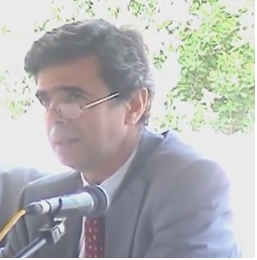
    kokkalas

    Ας σημειώσουμε ότι το 2009 ο Γιάννης Κοκκάλας δεν έβλεπε ως κύριο εμπόδιο στη διαδικασία της ευρωπαϊκής ολοκλήρωσης τη Γερμανία αλλά τη Γαλλία. Εκείνοι που ασπάζονται  τωρα τη γαλλική καμπάνια για Germanexit από το ευρώ, να το έχουν υπόψη αυτό.

    Γουέϊν Χωλ
     

  • Has the European Union been a bad idea?

    As a first (and hopefully not last) step towards an objective discussion of today’s situation of the European Union, outside of the logic of parties, parliamentary and “media” conflict, on 16th July there was, with the compliments of Mr. Paschalis and Mrs. Salomi Melissaris, a screening of an extract from the paper presented in 2009 by Mr. Ioannis Coccalas, entitled “From Altiero Spinelli’s Draft to the Treaty of Lisbon”. As Deputy Director of the European Parliament’s office in Athens, Mr Coccalas was at that time one of the speakers at the “Ioannis Capodistrias, Altiero Spinelli, Europe” conference held on 21st June 2009 in Aegina.

    An introduction to the 16th July screening was presented by Wayne Hall, member of the steering committee of the Aegina Association of Active Citizens.

    21

    INTRODUCTION

    I would like us to be in agreement that in today’s discussion it will not be relevant whether we voted YES or NO in the referendum, whether it is mainly Simitis and Papandreou, Samaras and Venizelos, or Tsipras and Varoufakis who are most to blame for the present situation in Greece. I would like us to agree also that it is not going to be relevant today whether we prefer Greece to remain in the euro or to leave the euro. In any case this is a question that is not going to be decided by ordinary Greek citizens, at least for the moment. The conflict that is so evident in the Parliament around that subject, among others, is something we can monitor. The conflict in the mass media, in the talk shows, in the journalistic squabbles is something it is perhaps preferable for us not to watch, because as it seems its main purpose is to frighten us rather than inform us.

    The question of the media is of central importance. I think that even citizens who voted YES must have been at least uneasy about the stance taken by the Greek and international media in the week that preceded the referendum. This problem is also at the heart of the Appeal by German Greeks and Greek Germans and the Greek answer that was formulated by representatives of the three associations of Aegina: the Association of Active Citizens, the Ioannis Capodistrias Cultural Association and the Women’s Association.

    Professor Juergen Link, who initiated the Appeal by German Greeks and Greek Germans, proposes a seminar on the problem of the media, which in Germany cultivate hatred of Greeks and in Greece hatred of Germans. In reality what is needed is more than a seminar. What is needed is a form of pan-European politics that is not influenced by the media, which places a negative stigma on every influence from this direction. This is perhaps something for discussion among those who would like to be actively involved in such a project of delinkage from the media. We have already made a beginning with the programme we made in 2013 on the VMedia web channel Europe Starts from Here.

    In any case let us agree that for the purposes of today’s discussion it is not relevant which Greek politician has played the worst role. The subject is not Greek internal politics, or even Greece in general. The subject is Europe, the European Union, because the European Union as we have known it – this was written a day or two ago by the Irish journalist Fintan O’Toole – ended last weekend.

    European integration was based on three assumptions, three conditions. The first condition was that the process was consensual: each member state lost more and more of its sovereignty because it was choosing of its own free will to do so. The second term was that this step-by-step procedure was irreversible. This was the terminology of the Treaty of Maastricht on the subject of monetary union. It was not part of the scenario that you could change your mind and go back. Neither could others change their mind about you and send you back. The third assumption was implicit and had to do with the role of Germany. As we know, Germany was defeated in WorldWar II, and badly defeated. In return for the opportunity to make a new beginning after this defeat it was considered self-evident that Germany would not try yet again to become the hegemon of Europe.

    Today Germany is not only trying to become the hegemon of Europe. It is succeeding in becoming the hegemon of Europe. I suppose that most of us here will have seen yesterday’s address to Parliament by Yanis Varoufakis. Not everyone admires the role that Varoufakis has played, but I think the conclusions of that address will be generally accepted.

    Varoufakis calls the so-called agreement that has just been voted by Parliament a “new Treaty of Versailles”. But most SYRIZA parliamentarians supported it, for the sake of the unity of SYRIZA. “We in SYRIZA are and will be united, at the time that Europe strikes a blow against itself through procedures that the historian of the future will describe as the moment of dismantling of the dream of Adenauer, Constantine Caramanlis, Andreas Papandreou, Willy Brandt, Helmut Schmidt and Helmut Kohl.”

    There was uproar in the Parliament after the speech by Varoufakis. Outside the Parliament, also, there was pandemonium. Here we are not shouting, we are not denouncing, and the reason for that is not concern for the unity of SYRIZA. I hope that our concern here is for the citizens of Greece to remain united at this conjuncture. And the hope is also, perhaps, that just as in 1828 when the modern Greek state was founded in Aegina, this island will function today also as a haven of stability and security within the chaos of Greece.

    The question we put forward is “Has the European Union been a bad idea?” We raise it not as a declaration but as a question. Certainly the man we are going to hear now does not believe that the priority is to leave the euro, or the European Union. But is he right or wrong?

    kokkalas

    The video can be found online here.

    Note that in 2009 Ioannis Coccalas saw not Germany but France as the key obstacle to the whole European integration process. Those who are now embracing the French campaign for a Germanexit should bear that in mind. (More on that here).

    16th July 2015


  • Giannis Varoufakis replies on his reasons for going to Aegina at the moment of the most crucial parliamentary vote

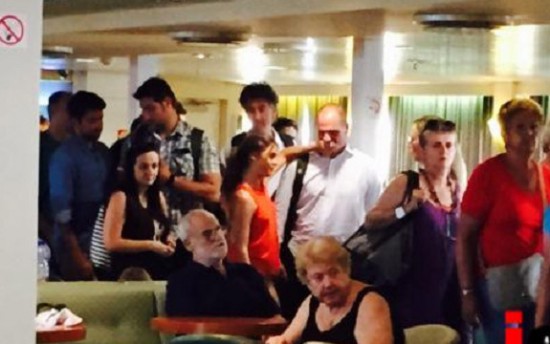
    Varoufakis and family on the ferry to Aegina
    Varoufakis and family on the ferry to Aegina

    A journalist complains that at the harbour of Aegina he was attacked by a member of the security for the former Finance Minister

    There has been a hail of negative comment in response to Yanis Varoufakis’ message through Twitter that he will not be in the Parliament for the vote on Greece’s proposals to the European Union

    Mr. Varoufakis cited family reasons in justification of his absence and shortly afterwards published through Twitter the letter with his vote in this evening’s parliamentary session, which he will not be attending.

    Nevertheless, after this photographs circulated which showed him together with his wife on the ferry for Aegina, where he has a house. This, as it was to be expected, provoked even further comment.

    It should be noted that according to Article 70a of the Parliamentary Regulations, parliamentarians can vote by mail only if they are on business abroad for the government or the parliament.

    A short time ago protothema.gr complained that one of their journalists who tried, together with a photographer, to approach Mr. Varoufakis as he was disembarking, was attacked by a member of the security of the former Minister of Finance. The website notes that one of the bodyguards of Yanis Varoufakis attacked Frixos Drakontidis when the journalist tried to extract a statement from the former minister.

    Protothema indeed says that the SYRIZA parliamentarian in effect ordered the police to remove the journalist by force, with the result that one of the three policemen in Varoufakis’ personal guard attacked Mr. Drakontidis, grabbed him by the neck and shoved him away on the hatchway, with the result that he fell over and was injured on the head.

    According to reports, the Minister for Protection of the Citizen Giannis Panousis was informed of the attack on the protothema journalist and undertook to investigate the incident in depth. The journalist Frixos Drakontidis has already reported the incident to the island’s harbour authority and proposes to institute legal action against the former minister, his wife and the three security guards.

    A few minutes after publication of the relevant story Yanis Varoufakis responded with a tweet.

    (Yanis Varoufakis: Fortunately there are people who respect what it means that I wish to spend the weekend with my little daughter before she returns to Australia where she lives.)

    Source: Lifo http://www.lifo.gr/now/politics/70685?ref=yfp#comment

    From the absurd to the tragic?

    Anyone living through, or even just following, developments in Greece knows all too well the meaning of expressions such as “critical moments”, “climate of tension”, “dramatic overturn”, “pressing on the limits”. From Monday something new, ostentatious and blatant will be added to all of these: the absurd.

    The word may seem strange, or an overstatement. But how else could one characterize the total reversal of the meaning of such an amazing event as the referendum of 5th July, only hours after its occurrence, and indeed by its own exponents? How could one explain that Messrs Meimarakis and Theodorakis, that is to say the heads of the camp of the (crushingly) defeated, should have become the official spokespersons for the line being followed by the Greek side, and should be promenading from pillar to post laying down its terms? How is it possible for a devastating “no” to the memorandum policies of austerity to be “interpreted” as a green light for a new memorandum? And to put it in commonsense terms: if they were disposed to sign something even worse and even more binding than Juncker’s proposals, what was the point of the referendum, or rather of the struggle to achieve the “no” and, naturally, of its stunning consummation?

    The sense of the absurd is not just a product of this unexpected reversal in the dynamics of the situation. It stems above all from the fact that all of this is unfolding before our eyes “as if nothing has happened”, as if the referendum were something like a collective hallucination, which suddenly ends, leaving us to continue uninterrupted what we were doing before. But because we have not all become lotus-eaters, let us be permitted to give a brief résumé of what has taken place in the course of the last days’ unbelievably rapid developments.

    So, last Sunday the Greek people staggered Europe and the world, responding en masse to the government’s call and, in conditions unprecedented by the post-war standards of any European country, overwhelmingly voted “no” to the extortionate and humiliating proposals of the lenders. Both the extent of the “no” and its qualitative composition, with its enormous lead in the working class and popular strata and in the younger generation, testify to the depth of the transformations that have been occurring, or rather that have crystallized in such a short time, in Greek society. Friday’s mass mobilizations, the climate “from below” that has prevailed over the last days, not to mention the enthusiastic wave of international solidarity, testify to the huge potential that is opened by the popular intervention in favour of a political choice for conflict.

    But from the morrow of that “day that shook the world”, before the victory cries in the country’s public squares had even fully died away, the theatre of the absurd began. Under the aegis of the actively pro-YES President of the Republic, the government summoned the heads of the defeated parties to elaborate a framework for negotiation positing the euro as unpassable outer limit of the Greek position and declaring specifically that it has no mandate for a rift. Public opinion, still affected by the joyful haze of Sunday, watches as the representative of the 62% accepts subordination to the thinking of the 38% in the immediate aftermath of a resounding victory for democracy and popular sovereignty.

    On Tuesday the government, with no “proposal” to make, transfers its operations to Brussels for the extraordinary Eurogroup meeting and, as is absolutely logical, finds itself confronted with a new, abrupt and even harsher ultimatum. The next day Euclid Tsakalotos inaugurates his duties as Finance Minister (in the interests of brevity we pass over the factor of the “Varoufakis resignation”, simply noting that it was a demand of the lenders) by sending to the ESM (European Stability Mechanism), the organization that manages the greater part of the Greek debt, a letter requesting a new loan of 50 billion euros, which will be accompanied of course by a third memorandum[1]. It is envisaged, indeed, that the Parliament will begin on Monday to vote the relevant enabling legislation.

    The Tsakalotos letter continues with references, inter alia, to Greece undertaking “to honor its financial obligations to all of its creditors in a full and timely manner.” It is obvious that despite the assurances that were heard after the proclamation of the referendum for “restarting discussions from scratch” the “negotiations” (which are negotiations only in name) are continuing exactly from where they left off, with the Greeks lowering the bar for their opponents to a point that is politically unsustainable in Greece, as we correctly judged at that time.

    The same day, pending the new Greek “proposals”, which were to be “reliable, detailed”, etc., i.e. made to measure for a memorandum, the Prime Minister addressed the European Parliament and declared that “if my aim had been to take Greece out of the euro, I would not immediately after the closing of the polls have gone to make the statements I made and interpret the result of the referendum not as a mandate for a break with Europe but as a mandate for reinforcing our negotiating efforts so as to arrive at a better agreement”[2]. This amounts to more or less open acknowledgement that the result of the referendum was being “interpreted” with a specific end in mind, that of negotiation at all costs and avoidance of a rift.

    In the same speech the Prime Minister outlined quite succinctly the philosophy that for many weeks has been informing the whole stance of the Greek side and to which the “parenthesis” of the referendum has not brought the slightest change: “In these proposals we have evidently undertaken a powerful commitment to achieve the fiscal goals that are required on the basis of the rules, because we recognize, and respect, the fact that the Eurozone has rules. But we reserve the right of choice, the right of being able, as a sovereign government, to choose where we shall place, and add to, the burden of taxation, so as to be in a position to attain the required fiscal objectives.” So the framework is given: it is that of the restrictive measures which secure fiscal surpluses and aim at the repayment of debt. It is incontestably the framework of the memoranda. The “disagreement” is over the “distribution of the burden”. It involves a (supposedly) “socially more just” variant of austerity, which will be presented as “redistribution” at the same time as it perpetuates the recession (every reference to commitment to non-recessionary measures has been effaced) and impoverishment of the majority.

    In the meantime, and while these soothing reassurances are being put forward that demolish what has remained of SYRIZA’s programmatic commitments, there is a ramping up of the state of political siege that the country is enduring, with the European Central Bank holding closed the spigot of liquidity and trimming even further the value of bank bonds, leading ineluctably to collapse. And yet! Despite the gravity of the situation and despite the fact that through the imposition of capital controls part of the road has already been covered, nobody, apart from Costas Lapavitsas and some members of the Left Platform, is speaking of the self-evident and basic measures of self-protection that are necessitated by circumstances of this kind, starting from public control and nationalization of the banking system. The explanation for this is of course very simple: anything of this kind would place Greece with one foot outside the euro, which is precisely the absolute fetish on which the government is impaled, just as an – in no way radical – economist such as Paul Krugman ascertains that “the greater part of the cost has already been paid” and that it is time for Greece “to reap the benefits”[3].

    A very simple conclusion emerges from all this: with the moves it has made in the last week, the government has achieved nothing other than total restoration of the previous entrapment, from a much more unfavorable position, under the pressure of even more relentless economic asphyxiation. As for the political advantage, the powerful injection of political capital it derived from the referendum, it hastened to expunge it in record time, following at all points the line of those who had opposed it and who have every reason to feel vindicated, despite being trounced at the ballot box.

    But the referendum happened. It wasn’t a binge from which everyone has now recovered and it wasn’t a hallucination. On the contrary: the hallucination is the attempt to downgrade it to a transitory interlude for “letting off steam”, prior to resumption of the downhill course towards a third Memorandum.

    Let us put this forward with all due clarity: any attempt to cancel the popular will for overturn of austerity and the Memoranda amounts to hubris in the ancient Greek sense of the term. Whoever dares to lead the country, and the Left, to surrender and to dishonor should be ready to face the corresponding Nemesis. If such is to be the culmination of the dementia of these days we are living through, let us at least be fully cognizant that for this tragedy there is not going to be any deus ex machina nor any merciful Athena to assuage the wrath of the Furies.


    [1]The text of the letter here http://www.thepressproject.gr/article/79045/Auto-einai-to-Elliniko-aitima-ston-ESM-metafrasmeni

    [2]Τhe full text of the Prime Minister’s speech here http://left.gr/news/omilia-tsipra-stin-olomeleia-toy-eyrokoinovoylioy-tin-Tetarti

    [3]Paul Krugman’s article is here http://www.euro2day.gr/specials/opinions/article/1346935/kroygkman-o-megalyteros-logariasmos-toy-grexit-pl.html

  • Ο Γιάνης Βαρουφάκης απαντά για το ταξίδι στην Αίγινα την ώρα της πιο κρίσιμης ψηφοφορίας

    856564_var11_2

    Βροχή αρνητικών σχολίων συγκέντρωσε νωρίτερα ο Γιάνης Βαρουφάκης όταν μέσω Twitter γνωστοποίησε ότι δεν θα είναι απόψε στη Βουλή για να ψηφίσει.

    Ο κ. Βαρουφάκης επικαλέστηκε οικογενειακούς λόγους για την απουσία του και λίγο αργότερα κοινοποίησε μέσω Twitter την επιστολή με τη ψήφο του για την αποψινή ψηφοφορία στην οποία θα απουσιάζει.

    Ωστόσο λίγο μετά κυκλοφόρησαν ο φωτογραφίες που τον έδειχνα μαζί με η σύζυγό του να βρίσκεται στο καράβι για την Αίγινα όπου έχει εξοχικό. Αυτό όπως ήταν αναμενόμενο προκάλεσε ακόμη περισσότερα σχόλια.

    Πρέπει να σημειωθεί ότι σύμφωνα με το άρθρο 70Α του Κανονισμού της Βουλής, οι βουλευτές μπορούν να ψηφίζουν με επιστολική ψήφο μόνο όταν βρίσκονται σε αποστολή της Κυβέρνησης ή της Βουλής στο εξωτερικό.

    Λίγη ώρα νωρίτερα το protothema.gr κατήγγειλε πως δημοσιογράφος τους που προσπάθησε μαζί με φωτογράφο να προσεγγίσει τον κο Βαρουφάκη όταν αποβιβάστηκε, δέχτηκε επίθεση από άντρα της ασφάλειας του πρώην ΥΠΟΙΚ. Η ιστοσελίδα αναφέρει μάλιστα πως ένας από τους σωματοφύλακες του Γιάνη Βαρουφάκη επιτέθηκε στον Φρίξο Δρακοντίδη όταν ο δημοσιογράφος προσπάθησε να ζητήσει μια δήλωση από τον τέως υπουργό.

    Το protothema αναφέρει μάλιστα πως ο βουλευτής του ΣΥΡΙΖΑ ουσιαστικά έδωσε εντολή στους αστυνομικούς να τον απομακρύνουν βίαια με αποτέλεσμα ένας από τους τρεις αστυνομικούς της προσωπικής του φρουράς να του επιτεθεί, να τον αρπάξει από το λαιμό και να τον σπρώξει με βία στη μπουκαπόρτα όπου έπεσε και τραυματίστηκε στο κεφάλι.

    Για το περιστατικό της επίθεσης στον δημοσιογράφο του ΘΕΜΑτος ενημερώθηκε σύμφωνα με το ρεπορτάζ ο υπουργός Προστασίας του Πολίτη Γιάννης Πανούσης ο οποίος δεσμεύθηκε ότι θα ερευνήσει σε βάθος την υπόθεση ενώ ο δημοσιογράφος Φρίξος Δρακοντίδης έχει ήδη μεταβεί στο λιμεναρχείο του νησιού όπου καταθέτει μήνυση εναντίον του πρώην υπουργού, της συζύγου του και των τριών ανδρών ασφαλείας.

    Λίγα λεπτά μετά το δημοσίευμα ο Γιάνης Βαρουφάκης απάντησε με ένα ακόμη tweet.


    Πηγή: www.lifo.gr

  • Συζήτηση με τον Δήμαρχο Αίγινας για την Ευρώπη των Πολιτών

    Πριν από τις εκλογές της 25ης Ιανουαρίου 2015 που έφεραν στην εξουσία τη σημερινή μας κυβέρνηση, ένας γερμανός καθηγητής πανεπιστημίου ο κύριος Juergen Link, μαζί με ομάδα υποστηρικτών, δημοσίευσε μια “Έκκληση από Γερμανοέλληνες και Ελληνογερμανούς” (Για μια αμερόληπτη και δίκαιη ανταπόκριση στις δημοκρατικές αποφάσεις του ελληνικού λαού).
    Πρόκειται ουσιαστικά για διαμαρτυρία κατά της εχθρικής και δόλιας στάσης των ΜΜΕ της Γερμανίας ενάντια στην Ελλάδα και στους Έλληνες. Μέχρι σήμερα έχει εξασφαλίσει την υποστήριξη περίπου 1.500 πολιτών, κυρίως στις γερμανόφωνες χώρες.
    Τον Μάιο εδώ στην Αίγινα σε σύσκεψη εκπροσώπων από τρεις συλλόγους: το Σύλλογο Ενεργών Πολιτών, το Μορφωτικό Σύλλογο «Ιωάννη Καποδίστρια» και το Σύλλογο Γυναικών, αποφασίστηκε η διαμόρφωση «ελληνικής απάντησης» στην «‘Εκκληση από Γερμανοέλληνες και Ελληνογερμανούς.»

    Την Παρασκευή 26 Ιουνίου πραγματοποιήθηκε συζήτηση με τον Δήμαρχο κ. Μούρτζη για το περιεχόμενο και το στόχο αυτής της «ελληνικής απάντησης». Το κείμενο της «απάντησης» αναρτήθηκε στην ιστοσελίδα «Καποδίστριας-Σπινέλι- Ευρώπη» ως συμβολή στη συνεχιζόμενη καμπάνια υπέρ της «Ευρώπης των Πολιτών».


    Υπογράψετε την ελληνική ανταπόκριση στη γερμανική έκκληση εδώ: http://main.cse-initiative.eu/?page_id=361

    ΠΗΓΗ: Aegina Light