Category: English

  • The Founder of the European Idea

    galatia

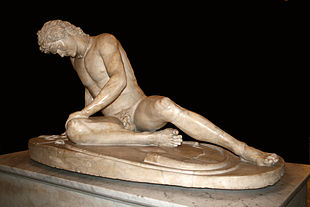
    Try to bring back to your memory the “Dying Galatian”, the ancient Roman marble copy of a lost Hellenistic statue that is now in the Capitoline Museum. At the beginning of the 19th century Europe bears a certain resemblance to this figure, the wounded soldier. The open wound was France. The revolution of 1789 had enthralled the minds of all Europeans able to read Rousseau or dream of a life with greater justice.

    France had executed its monarch and established the radical republic of the Jacobin revolutionaries. A general had defeated its enemies and exported its principles to the rest of Europe. But such was his ambition that he had ended up just as absolutist and arrogant as the old monarchs. Napoleon Bonaparte was a force that to the peoples at times appeared to be their liberator and at times their oppressor.

    This takes us to discussion of the first serious assignment to be undertaken by Capodistrias, in 1811-1812. As head of counter-espionage, first for Admiral Chichagov and later for Barclay de Tolly he was put in charge of psychological warfare before and after every encounter between the French and Russian armies on the battlefield.

    The most important factor for an army on foreign territory is the friendship of the inhabitants. This was to be secured by representing Napoleon as an oppressor and the Czar as a liberator. The battle had to seem for the locals like a battle for their own country and not for a monarch. Achieving this was the secret of Capodistrias’ success on the battlefield, for which by the way he was awarded numerous decorations, the most distinctive being the white colour of his hair.

    He had the good fortune to serve Czar Alexander, who at that time was the most liberal of all Europe’s hegemons. The Czar noticed the ability, but also the similarly liberal convictions, of the Corfiot count, who at 35 was the same age as himself. He charged him with the difficult task of achieving a political settlement for Switzerland. The day that was achieved can be celebrated by the Swiss as the anniversary of their republic, of their freedom and neutrality, the foundation of their society’s prosperity to this day.

    Napoleon was decisively defeated. The leaders of the old political world wanted to re-found Europe in such a way that they would not have to fight any more wars. For that purpose they organized a protracted dancing party with tons of champagne and delectable food which they gave the name the Congress of Vienna. The situation in the capital of Austria in 1814 and 1815 could be characterized as follows:

    The Tsar of Russia copulated for everyone.
    The King of Prussia thought for everyone.
    The King of Denmark spoke for everyone.
    The King of Bavaria (father of Otto) drank for everyone.
    The Elector of Saxony ate for everyone.
    The Emperor of Austria paid for everyone.


    It was into this climate of merrymaking in the imperial pavilions that Capodistrias entered, always dressed in black but with a serenity and an incredible grace both of manner and appearance. Metternich called him Saint John of the Apocalypse. He was not interested in celebrating, dancing or lovemaking. He was steadfast in his censure of the light-mindedness of his age. He could not relate to it because he was being impelled by another agenda: that of liberating his country.

    The real challenge for the winners of every war is how they will divide the spoils after their victory. This is why the Czar’s great enemy was Austria’s foreign minister and their current host, Metternich, who had a powerful agenda of his own for the future. The Czar wasn’t able to deal with him effectively until Capodistrias came into his private chambers to study his correspondence. The world thus had one last hope for progress being possible.

    To understand what Capodistrias achieved on the international diplomatic scene, what world he was attempting to defend, and what way of looking at the world, it is indispensable to understand what world his opponent Metternich was trying to prop up. For Metternich the peoples had no country. They had a hegemon. The basis of a state was not the people but the hereditary rights and the matrimonial links of the monarchs. The world was being required to go back to the ancient regime, as if the French Revolution had never taken place and as if there was no such thing as the Enlightenment.

    Metternich had two instruments at his disposal: his direct connections with England, Prussia, Russia and Austria and the ability to drown in blood every attempt to dispute his decisions. All that was necessary was the Quadruple Alliance. He characterized everyone else as sub-allies if they approved of his decisions and terrorists, Jacobins, revolutionaries, if they did not respect them. Metternich was quite simply the embodiment of Restoration.

    In such a world, bound hand and foot to agreements between monarchs, it was impossible that Greece should ever be liberated. This was primary data for Capodistrias. The second consideration was that this world of Metternich had no hope of prevailing in a future where more and more European citizens were awakening. For Capodistrias the basis for the state was not the hegemon but the decision of the citizens to establish a state for themselves and their children.

    For all his admiration for republicanism and democracy, Capodistrias did not want to abolish monarchies. How could he, anyway, as the Foreign Minister of a Czar? What he wanted was to reform monarchies. He believed in introducing institutions, constitutions, and wherever he could, he did so. Even in the Czar’s possessions such as Poland and Bessarabia.

    He urged all parties, even his own hegemon, to embark on the necessary preparation for a constitutional monarchy. People must be enlightened through education so as to be able to demand a Constitution. Specifically, he familiarized the Czar with the method of Pestalozzi through the schools of his friend Fallenberg in Switzerland. On Fallenberg’s estate young people were brought into contact with the land through an incredibly progressive, for those days and for our day, programme of agricultural economy, acquiring ethical substance and independence of mind.

    He believed that at the end of the road where just one generation was educated in that way, the citizens of a state – for the most part free cultivators of the land, – could expect a life of freedom, social progress and an economy that would foster a disposition for peace and human happiness. Specifically, Capodistrias was here in Aegina when he said that he had no faith in Greeks who were over thirty. He believed only in the younger generation. This is why he was a governor, prime minister we would say today, one of whose daily tasks was to go to lessons and see, and hear, how the teachers were imparting their knowledge to the students. He had a great belief in the younger generation and not so much in those who were over the age of being able to learn.

    So Capodistrias was at the opposite pole to the world that was being constructed two hundred years ago. He was Europe’s first and greatest reforming politician.

    At this point we need do no more than enumerate the endeavours of Capodistrias that substantiate this characterization:


    1. He gave the Swiss the most liberal of constitutions, with provisions for neutrality. .
    2. He helped the Germans as much as anyone of his time in their course towards federation. Indeed in 1815 he demanded for their country that neutrality and disarmament that would bring peace to Europe one hundred and fifty years later.
    3. He demanded the step-by-step disarmament of the whole continent.
    4. He proposed public condemnation of unilateral interventions by a great power into the affairs of another state
    5. Specifically, he made two attempts to defend the Italians from interference by a foreign power (Austria).
    6. On countless occasions he compelled abstention from secret diplomacy in the interest of transparent and honest communication between peoples (e.g. in Poland, in France, in the Triple Alliance against Russia, etc.)
    7. He attempted to impose a Constitution on the corrupt monarchy of Spain, along with general amnesty, release of political prisoners, abolition of tax privileges for the nobility in Spain. .
    8. He proposed abolition of the slave trade through which Europeans were exploiting the African continent, and the establishment for this purpose of an international supervisory authority.
    9. He proposed the securing of independence for the Spanish and Portuguese colonies.
    10. He saved France from dismemberment and Europe, perhaps, from new wars between nations for one hundred years.


    Coming closer to Greece:


    1. He saved the Moldavians and the Vlachs from massacres at the hands of the Ottomans.
    2. He saved the Serbian revolution from total annihilation.
    3. He saved the Ionian Islands from the Austrians, though admittedly subsequent British oppression proved equally harsh.
    4. From behind the scenes he organized the outbreak of the Greek Revolution.
    5. On at least four occasions he saved the Revolution from definitive ruin (this must be the subject for another meeting however).


    There is a historical question that at some point today’s short-sighted authorities must allow to be investigated. To what extent was Capodistrias simply a person who saw revolutions break out all over Europe and sought through his reforming activity to defuse them, as most historians believe, and to what extent was he their secret inspirer, financier and leader as Metternich and the king of England – the Prince Regent of England – believed. Metternich regarded him as the “chief of the ultra-liberals”. George IV called him “a vagabond”. Only unimpeded access to the state archives can provide us with the details. There is the well-known question of the Rumanian historian Otetea and the answer from Despotopoulos, from our side.

    Returning to matters of which we can already be certain, I want to emphasize an aspect of the political activity of the Corfiot count that is little known today. In an endeavour at the Congress of Aachen in 1818 to impose his reforming and liberal programme Capodistrias submitted a memorandum outlining the principles of a United Europe he said that an agreement between the four great victorious powers was not reached for the purpose of oppressing the remaining people, nationally and socially. He said that these great powers did not possess the right to intervene unilaterally in the affairs of small states. He was foreshadowing a more general alliance between all the European peoples as equals, who should together make decisions on European questions. The four great powers – five with France – would function as a security council, intervening together in matters where Europe as a whole agreed that they should. This memorandum laid the foundations for the European Union, but also for a world-wide community of nations.

    Capodistrias once wrote: “We are no longer in an era when secret and hypothetical alliances can save empires. What can protect them today is a generalized alliance, which to succeed must be public and not secret or merely surmised.” And in another instance: “On one side is the prospect of a sincere friendship between all states and the prospect of progressive improvement of social institutions. On the other is the atrocious rule of anarchy and revolutionary despotism, with all the dangers of ‘divide and rule’ that are familiar from the old diplomacy.”

    Returning to the opposite camp: in 1819 Metternich wrote confidentially of his great opponent. “Capodistrias is not a bad person, but to be frank he is an absolute fool, a perfect example of stubbornness and a wrong outlook. He lives in a world that for us is a nightmare.”

    Τhe following year Metternich was drinking tea with the Czar and enlisting all his preparatory efforts against Capodistrias, he persuaded Alexander that his minister’s new order of things represented a threat to the Czar himself. “If I had known,” he said, “that with a cup of tea I would be able so easily to change the Czar’s mind, I would have brought a shipload of tea from Asia to persuade his minister also.”

    And so it was. Capodistrias tried to induce the Czar to make war against Turkey but it was already too late. Metternich was now free to reintroduce his own programme of repression of the peoples, the absolute power of hegemons and restoration of secret diplomacy in European affairs.

    There were at least two moments in his later career to remind him of his old sparring partner Capodistrias. The first was in 1827, on the day of   his third marriage, when it was announced to him that France, England and Russia had crushed Ibrahim at Navarino and by so doing also destroyed Metternich’s confidence in the power of his Holy Alliance, and his ability to control it. The second was in 1848, when he made his escape through the back door and chancellory garden, secretly, through fear of the revolutionaries. The – for him and those like him – nightmarish world of Ioannis Capodistrias had prevailed, for him definitively.

    What would Capodistrias say today, if here were at the summit of European diplomacy? Irrespective of the fact that two centuries have passed and the world has changed considerably, no risk is involved, no leap of the imagination or interpretation of his words. All that is needed is enumeration of these guiding principles:

    Today Capodistrias would say to us:


    Respect the freedom and self-determination of the peoples

    • Don’t allow powerful states to impose their views on smaller states and oppress them
    • Abolish secret diplomacy
    • Extend the institutions of democratic states. Enlarge them and introduce new progressive constitutions
    • Respect human rights
    • Abolish the contemporary slave trade
    • Advance the project of general disarmament
    • Reform your world, not neglecting in the process the happiness of each separate individual, his links to the land, education, ethics. Not neglecting cultivation.


    Panagiotis Paspaliaris


    https://www.youtube.com/watch?v=-wPniHFeXiM

    Minutes 11.55 to 25.55

    Giulietto Chiesa visit’s the Capodistrian buildings of Aegina  https://www.youtube.com/watch?v=UmDHoNPfmlM

    Daniel Cohn-Bendit is told of the importance of Capodistrias https://www.youtube.com/watch?v=vrwc4496WNk

  • France’s benefactor

    Napoleon succeeded in exporting the French Revolution to Europe, along with some of its admirable achievements. At Abukir, at Austerlitz, at Jena, at Borodino he defeated the hegemons of the old European order, sometimes resoundingly, sometimes with great losses to himself. Some of them changed their way of thinking: they adopted French principles and ideas, and made their comeback at Leipzig on 19th October 1813.

    At the following peace conference the victors did not choose to vanquish France: they sent Bonaparte into exile. But everything changed when the Corsican escaped from the island of Elba and on 18th June 1815 led a new army against his united enemies. It was the hundred-day last stand of the ravager of our continent.

    General Blücher and Talleyrand

    In the summer of 1815 the Prussians and their allies entered Paris. General von Blüchermined the Jena bridge over the Seine, which had been built to remind the world of the humiliating defeat of the Prussians by the French in 1806. The French prime minister Talleyrand, who was himself making a comeback, threatened via an emissary to go personally and stand in the centre of the bridge to prevent the German general from blowing it up.

    Von Blücher reflected for a while and then told his soldiers not to detonate the explosives until Talleyrand had arrived in the centre of the bridge, and then to blow it up, together with Talleyrand. In the centuries since that time the French have given the name Blücher to their savage, bloodthirsty dogs. They regard Talleyrand, by contrast, as France’s benefactor: he is said with his skillful diplomatic manoeuvres to have succeeded in averting its dismemberment. That, at least, is what is taught in French schools. The truth is that during this most crucial time for France his armoury of intrigue and (by now) old-fashioned charm had been exhausted. He threatened the allies that he would resign if France was dismembered. The allies could not have cared less and the Bourbon monarch accepted his resignation.

    The fifth duke of Richelieu

    Armand Emmanuel de Vignerot du Plessis, fifth duke of Richelieu, had as long-standing a relationship with the “legitimate” kings of France as is implied by his name. He left France after the Revolution and went into the service of the Russian emperor. Among other duties, the Czar assigned to him the task of founding the city of Odessa. His organizational ability was greatly above average. A brilliant Russian metropolis would henceforth hold sway over the Black Sea through the coming centuries. .

    Richelieu returned to France with the Bourbons and assumed the prime ministership after Talleyrand. In despair, he repaired to the chambers where the Czar was lodging in France. The dismemberment of France, both territorial and economic, had just been announced. He was received by the young confidant of Alexander I, Count Ioannis Capodistrias, with whom he appeared to be quite well acquainted. Richelieu spoke to Capodistrias of the travails that were in store for France. Capodistrias listened to him calmly and then said:

    “I have thought of an infallible means of saving your country today. Tomorrow will be too late. Do you want to hear it?”

    “Of course,” replied Richelieu.

    Capodistrias went to the adjoining room and dictated to his secretary Alexandros Stourtzas a letter, supposedly from Louis XVIII to the Czar. The letter said that Louis preferred to lay down his crown for the Allies to take rather than surrender France to them, dismembered and humiliated.

    Richelieu took the letter and gave it to the King, who copied it in his own hand. The next day Stourtzas handed it over to the already forewarned Czar at the time he was taking his seat for negotiations with the Allies. “As I expected,” announced the Czar in feigned consternation. (Napoleon had been the first to perceive Alexander’s histrionic talents.) “We are now in greater disgrace than ever. Louis has abdicated and he is right to do so. France is without a king. Find me another if you can. As for me, I wash my hands of it. The time has come for me to go home and for an end to be put to all this.[1]”

    The decisiveness of Alexander’s intervention caused general bewilderment. His anger quietened the passions against France. It was this day, this moment, that saved France from disaster. It was saved by the perspicacity of the Corfiot count and the histrionic talents of the man Napoleon characterized as the greatest actor of the East (and with whom, as he also said, if he had been a woman, he would most certainly have had an affair).

    Testimonies

    This little story is, or should be, of the utmost significance for the French. If this intervention had not taken place, their country would not be what it is today. If it had not been for the policies that Capodistrias outlined to the Czar, which led three years later to the definitive reintegration of France into the conclave of the Great Powers, France would today be a small country, like Belgium, with a glorious revolutionary past. And Europe would have been racked by dozens of wars prior to the great wars triggered by Germany in the following century.

    Richelieu wrote to the Czar on 1st October 1815: “It is to your powerful intervention that we owe the softening of position that we have achieved. I know that Count Capodistrias went beyond his brief. I take the liberty of petitioning Your Majesty not to disown him.”

    And Count Molé, too, wrote in his memoirs: “If France is still France, it owes it to three men, whose names should never be forgotten. To Alexander and his two ministers Capodistrias and Pozzo di Borgo.[2]”

    The reward

    There is no doubt that apart from his purely diplomatic but ingenious perception of the position of France in the balance of power that would bring peace to the continent, Capodistrias also had other expectations with the stance he adopted towards that country. He believed that in the coming insurrection that was planned for Greece, French assistance would be forthcoming. France would be a counterweight to the negative attitude of Britain. History fully justified this expectation.

    It is not known whether Richelieu and Louis were aware of this plan. It may well be because of this that they offered him more tangible rewards. Louis offered him gold. But Capodistrias declined. He requested only duplicate copies of the books in French libraries with ancient Greek texts. He wanted to send them to Corfu, to the library he planned to establish.

    His offer was accepted but it was never acted on, as far as we know. Instead of that, the succeeding French dynasty took care to initiate, together with the English and the Greek “kotsambasides”, the project of assassinating the Greek Governor, seventeen years later. One of the two assassins, George Mavromichalis, took refuge in the French embassy, as had been agreed prior to the murder.

    Today it is more necessary than ever that these events should become known to the people of France. Perhaps because it is the duty of history to reinstate the truth, even if this should happen only two hundred years later. Perhaps because the peoples of Europe should learn that the existence of one also serves the existence of the other, and that the continent has never gained from the ruin of one of its members. Perhaps simply so that the bequest should finally proceed and a “Ioannis Capodistrias” library open in Corfu.

    Panagiotis Paspaliaris

    [1] P. Stourtza –Edling. Memoires, Moscou,1888, pp. 244-250

    [2] A Corsican diplomat in the service of the Czar, who helped Capodistrias achieve the definitive return of France to the great powers of the Continent.

  • AEGINA (introduction to the 3-volume history by Georgia Koulikourdi)

    As is well-known, the island of Aegina has been an enduring historical presence in the Greek lands. This can be attributed both to the nature of its soils and to its geographical location.

    The composition of the soil, the climate, the water reserves, the configuration of the coastline, all create the conditions for support of a permanent population of between five and six thousand inhabitants. Its geographical position, virtually at the centre of the Saronic Gulf, makes possible a great increase in this demographic potential.

    As a result, Aegina, unlike the rest of islands of the Saronic Gulf, has been continuously inhabited since 3500 B.C. and so possesses important monuments from all historical periods. It could therefore be an ideal centre for studying Greek civilization as a whole.

    The mythical tradition of Aeacus and the Aeacidae reflects the political, economic and cultural significance of Aegina at its zenith. Particularly emphasized is the notion that the Aeginetans were descended from the island’s ants, making them a people indigenous to the island.

    In its long history, Aegina has gone through periods of great prosperity. Especially during the Archaic age (734 B.C. – 459 B.C.) it became an important naval and mercantile power due to its geographical position. It conducted transit commerce with all of the ports of the Mediterranean and accumulated great wealth. Furthermore, the Aeginetans were the first people in the Greek lands to employ silver as a medium of exchange, minting a silver state coin, the chelona, from metal mined from the island’s own deposits.

    The same period saw a flourishing of the arts of architecture and sculpture. The school of Aegina comprised a number of great artists who received commissions from far and wide. Significant activity is also to be noted at the same time in the field of athletics. Aeginetans emerged victorious in over thirty Panhellenic and local games, many of which were extolled by Pindar, the great Theban poet, who numbered among Aegina’s closest friends. These victories were achieved mostly by children and adolescents, as the adults were busy with commerce and seafaring.

    This activity laid the foundation for a prosperous civil society, creating a remarkably powerful class of capital-holding ship owners, which reigned supreme. Numerous struggles by supporters of democracy failed to topple it.

    Starting at the end of the 6th century BC, the social and political changes in Athens generated sharp conflict between the oligarchs in Aegina and the democrats in Athens. The latter seem to have secretly supported the democratic forces on the island in their struggle to topple the oligarchy.

    The social and political conflicts, along with Aegina’s commercial interests in the Dardanelles, go towards explaining the fact that the Aeginetan oligarchs made an offering of earth and water, tokens of subjugation, to Darius, King of Persia, on the eve of the Greco-Persian Wars. When Xerxes later launched his campaign of conquest of Greece, however, the Aeginetans fought alongside the other Greeks, and distinguished themselves in combat. Pytheas, son of Ischenoos and an Aeginetan, fought so bravely in the naval battles around Artemision that he inspired the admiration of even the Persians themselves . In Salamis, Aegina came first among the Greek city-states and Polykritos, son of Krios, was decorated as the bravest fighter.

    After the wars the conflict between Athens and Aegina sharpened even further. The Athenian democracy, inaugurating its imperialist policies and claiming its naval supremacy, programmed the eradication of the Aeginetan state, which was closing the gates of the Saronic Gulf, having formed close ties with the rival Dorian coalition. The oligarchs in Aegina relied on their naval tradition and superiority and did not update their naval power. The result was defeat, military and economic devastation (468 B.C.) and, with the start of the Peloponnesian war (431 B.C.), the removal of the entire population and the installation of Athenian settlers on the island. The Aeginetans who managed to survive returned to their homeland after the end of the war (404 B.C.) with the support of the Spartans, who in turn expelled the Athenian settlers.

    Nevertheless, there were also Aeginetan democrats, who were friendly towards Athens. Many of them helped the Athenians dispose of the thirty tyrants and, as can be inferred from a relevant tablet, some later took up residence in Piraeus.

    In the 4th century B.C. a politically and economically weakened Aegina took part in the Corinthian war on the side of Sparta. The Spartans used the island as a base for surprise attacks on the port of Piraeus and operations in the Saronic Gulf in general. In the second half of the 4th century B.C. the island was relegated to the status of a luxury resort where the rich would spend their summers and winters.

    In the Hellenistic period the island was sold by the Aetolians to Pergamon, later passing together with Pergamon into the possession of the Romans. It was used at that time as a naval base, where Roman and Pergamine fleets would anchor and often winter. The Pergamine period seems to have been a time of considerable prosperity for the island, to judge by the number of remaining rock-hewn tombs, monuments and other finds.

    In the early Christian years, the Gothic and Herulian raids in mainland Greece and the Peloponnese forced the residents of the neighbouring coastal areas to seek shelter in Aegina. The island’s population increased sharply and the refugees’ needs for housing and fortifications resulted in the destruction of almost all the ancient city’s monuments. But prosperity returned to the island during this period. The city grew populous. The traces of three large parish basilicas—in Panagitsa, close to the Metropolis (Cathedral), in Agios Nikolaos, and in Vardia, along with a synagogue in Karantina—testify to the extent of the city and the existence of a large Jewish community.

    From the 8th century A.D. until the 10th century A.D., extensive Saracen pirate raids forced part of that population to emigrate. The rest retreated to the island’s interior and built a new capital, known today as Palaia Hora (Old Capital).

    The year 1204 ushered in a protracted period of subjugation to various occupiers: the Franks (1204 A.D. – 1417 A.D.), the Catalans (1317 A.D. – 1451 A.D.), the Venetians (1451 A.D. – 1540 A.D. and 1687 A.D. – 1715 A.D.) and the Turks (1540 A.D. – 1687 A.D. and 1715 A.D. – 1821 A.D.). In each case it was the port of Aegina that served as the occupier’s naval base. The people suffered from exploitation by the foreign rulers, from the Turkish-Venetian wars and the from successive pirate raids. Thousands of Aeginetans were imprisoned or slain.

    The greatest disaster took place in 1537 A.D. Hayreddin Barbarossa, an admiral under the Sultan Suleyman II, occupied Aegina, which was a Venetian base at the time, and captured a large number of inhabitants—estimates range from 4,000 to 7,000, depending on the source. The destruction was so extensive that the impression was left of the island having been depopulated completely, as a result being resettled later by Albanian-speaking Greeks from the surrounding areas. On closer scrutiny, however, this idea has been shown to be false. Despite the successive disasters, the Aeginetan people did manage to survive and preserve their language, their orthodox tradition and their customs. Immigrants to the island, as well as the occasional refugees who elected to stay, were not numerous and assimilated into the local culture. Of course, due to the various disasters, the island became degraded both demographically and economically. The population declined and commerce and shipping contracted. Under these circumstances, unlike Hydra and Spetses, Aegina failed to benefit from the favourable conditions of the 18th century and grow wealthy. Another contributing factor to this was that the residents had the option of living off agriculture and were not obliged to seek a livelihood exclusively in commerce or seafaring. At the beginning of the 19th century the island was therefore predominantly agricultural, with limited seafaring activity.

    From the end of the 18th century, when some degree of safety began to return to the Saronic Gulf, the Aeginetans abandoned Palaia Hora, went back to the coast and settled where the ancient city used to stand, next to the old ports.

    Around 400 Aeginetans took part in the Greek Revolution of 1821. In its course, Aegina sheltered thousands of refugees and became the seat of government in 1826 and 1827. In 1828 and 1829 it became the capital and the centre for governor Capodistrias’ political, administrative, economic and cultural activity.

    As the end of the 19th century and the beginning of the 20th century approached, the development of sponge diving initiated another economic boom period, which ended, however, with the decline of sponge diving in the mid-20th century. The Aeginetans did not apply themselves to finding an alternative. In the meantime, there had been an intense wave of migration to North America, prompted by the sponge diving and culminating in the founding of Tarpon Springs, Florida, the only modern-day Aeginetan community outside of Aegina. It was also around this time that the great two-story neoclassical and bourgeois residences in the town and in Kypseli were built, giving Aegina its contemporary architectural character.

    Today Aegina lives off its pistachio cultivation and its heavy tourist traffic. Demand for houses and hotels has brought about intensive but chaotic and unplanned construction, which has degraded the environment, e.g. in Agia Marina. Thankfully, the pistachio cultivation has put something of a brake on more total predomination by real estate speculation.

    The Aegina of today has, as in the past, a great deal of potential. A more systematic approach to agriculture together with modern planning; the development of cottage industry and artisanship; proper organisation of voluntary associations; the protection of pistachio production; utilisation for scientific and social purposes of the Capodistrian buildings, which have been allowed to fall into ruin, and proper touristic development of the South-Eastern parts of the island, such as Mt. Ellanion and the traditional villages in the surrounding area, would lead to a more balanced and stable social and economic progress, all without neglecting maritime development, commerce and tourism, which are the foundations of the island’s economic life. The basic condition is that the environment and sea be protected. Without its beautiful shores and clean seas Aegina cannot survive, economically or in any other way.

    (Translation by Dimitris Hall)

  • International Conference: “Capodistrias – Spinelli – Europe”

    1. Sunday, 23rd November 2008 17.55 From Aegina Portal (translated)

    1

    An international conference whose style and content provide a glimpse of the importance of the island and its history was held in Aegina, with proceedings opening yesterday Saturday at the Hotel Danae. The international conference took place in the context of the celebration of the 180th anniversary of the swearing-in of Ioannis Capodistrias and forms part of the commemorative celebrations programmed for this year by the Municipality of Aegina. The promotion of the Capodistrias – Spinelli activities in relation to the European integration project began to be promoted approximately two years ago by Mr. Wayne Hall, both from within an informal group around the subject in question, and through the exchange of relevant correspondence and personal contacts with the Municipality of Aegina and other groups on the island with the potential for involvement.
    2
    Yesterday’s conference emerged from an initiative by Messrs. Alexis Krauss and Wayne Hall, implemented by the Association of Active Citizens under the auspices of the Municipality of Aegina. The potential of this international conference was obvious from the moment it was announced, i.e. that it could significantly strengthen promotion of the content of Ioannis Capodistrias’ politics, which – as became evident – two centuries ago foreshadowed Europe’s present aspirations. The outlines of the international conference in Aegina were defined by important personages from the European diplomatic and political firmament, such as the ambassadors of Switzerland, France, Russia, Slovenia, Italy, the deputy director of the European Parliament’s office in Greece Mr. G. Kokkalas and others. Unfortunately because of the weather, which necessitated a ban on shipping movements, these guests were unable to participate in the conference.

    3
    The international “Capodistrias-Spinelli-Europe” conference got under way a little after 9.30 on Saturday morning, unfortunately with a serious disadvantage, obliging the organizers to proceed to partial revision of the programme. Nevertheless, it subsequently turned out that the conference proceeded normally, focusing on its thematic central idea.

    4


    The conference proceedings opened with a welcoming speech from the Mayor of Aegina, Mr. Panagiotis Koukoulis, from Mr. Andreas Siopachas, deputy mayor of occupied Famagusta, from Mr. Pericles Pangratis, president of the Municipal Council of Corfu, from Father Emmanuel Giannoulis, presbyter of Aegina’s historic Cathedral, from Mr. Georgios Athanassiou, representative of the Municipality of Poros and Messrs. Stratos Pantavos and Wayne Hall of the Aegina Association of Active Citizens.

    During the conference the following videos were screened: “Capodistsrias-Spinelli-Europe”, production of the Aegina Association of Active Citizens, “Altiero Spinelli”, production of the European Parliament, “Jean-Gabriel Eynard” production of Mme. Michelle Bouvier Brown and “Aegina” of Sofia Sfyroera.

    The discussions were co-ordinated by Mr.Panagiotis Koukoulis, Mayor of Aegina, and the university professor Costas Gavroglou, president of Aegina’s Cultural Centre. A distinctive style was imparted to the conference proceedings by the contributions of young people such as the president of the local youth council Costas Vogiatzis, the representative of the Aegina Women’s Association Eleni Skrekou and the President of the Souvala Professional Association Petros Petritis.